Compare the Bitcoin purchase methods before paying, and plan how you will retain the final confirmation.
Keep the same core records whether you use a debit card, credit card, ACH or wire transfer. The receipt and completed transaction determine the facts; the payment-method label alone does not establish tax treatment.
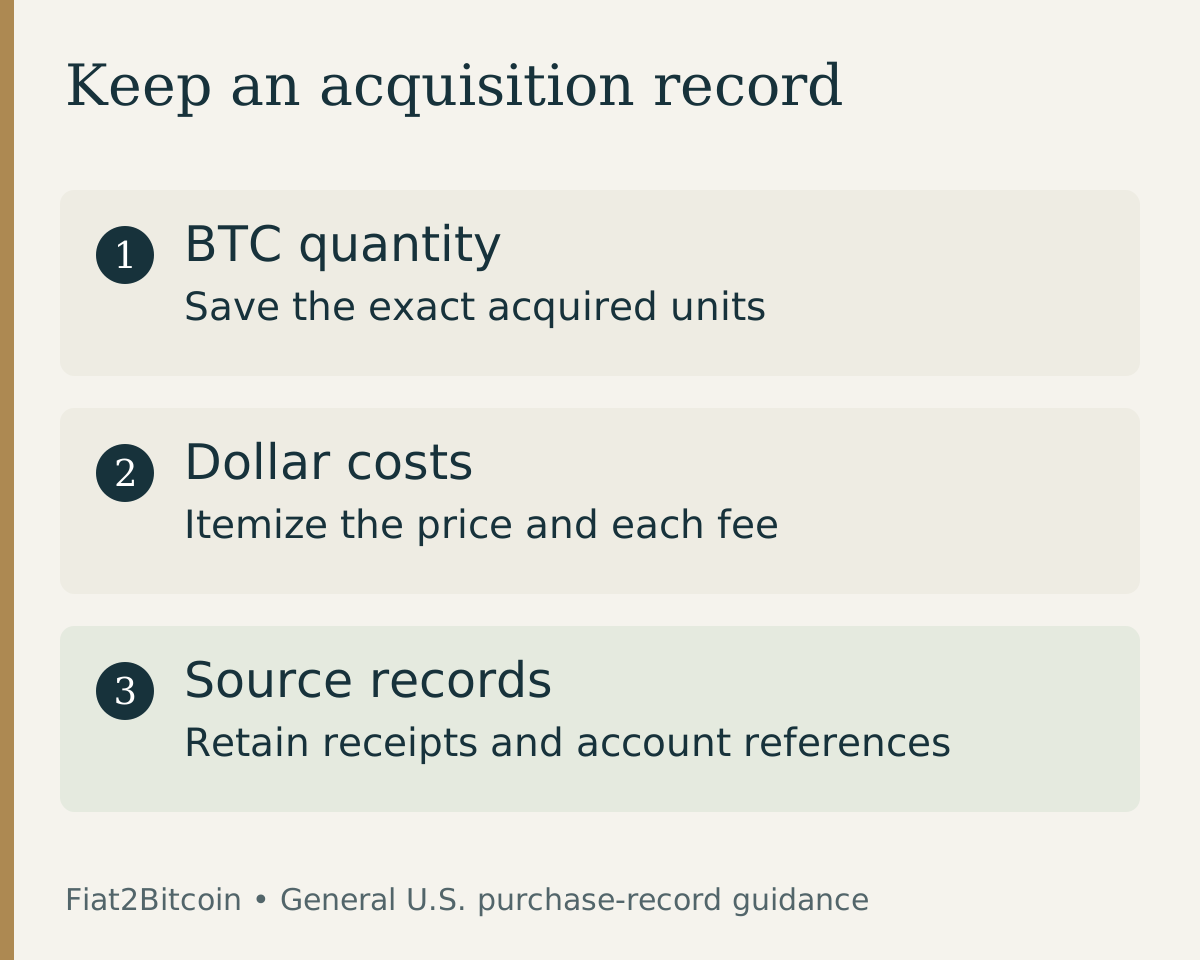
What is crypto cost basis?
Basis is the amount assigned to an asset for tax purposes. The IRS basis-of-assets explanation describes it as the starting point for determining gain or loss, with adjustments applying in some circumstances. The relevant basis for a later transaction may therefore be an adjusted figure.
Keep three numbers separate: the dollars used to acquire BTC, your basis in the acquired units and their current market value. A wallet's dollar estimate can change without another purchase taking place.
This article focuses on acquiring BTC with dollars. Gifts, inherited assets, compensation, rewards and crypto-for-crypto exchanges can require different treatment. Do not apply a simple purchase formula to those situations without checking the relevant rules.
How do purchase fees affect the starting figure?
IRS digital-asset FAQ 56 explains that basis for assets bought with cash includes the cash price plus qualifying transaction-service costs paid to effect the purchase. FAQ 53 defines those costs.
Keep the provider's itemized receipt. A service fee, a bank charge, a borrowing cost and a later wallet-transfer charge are not automatically the same kind of tax item. Record them separately so their treatment can be checked.
The Bitcoin purchase-fee guide helps compare what a purchase costs economically. This article answers a different question: which records support the basis calculation?
A simple Bitcoin cost-basis example
Hypothetical example: a completed purchase delivers 0.01 BTC. The receipt separately shows $600 for the BTC and a $12 qualifying purchase-service fee, both paid in dollars. Assume there are no other costs, adjustments or transactions.
Scroll across the table to see all columns.
| Item | Amount |
|---|---|
| BTC acquired | 0.01 BTC |
| Dollar price of that BTC | $600.00 |
| Qualifying purchase fee paid separately | $12.00 |
| Total starting basis for those units | $612.00 |
| Equivalent basis per 1 BTC | $61,200.00 |
The last row divides $612 by 0.01. It does not mean you bought one BTC, and it is not today's Bitcoin price. The basis of the 0.01 BTC in this example remains the total $612, subject to any later applicable adjustments.
If the $612 total already includes the $12 fee, do not add that fee again. If the actual receipt instead deducts a fee from the Bitcoin delivered, or pays a charge with existing cryptocurrency, the facts differ from this example. Retain the original records and check the correct treatment.
What should you save with each purchase?
The IRS digital-assets guidance directs taxpayers to keep sufficient records of purchases and other transactions. A bank debit by itself may not describe the asset or exact quantity acquired.
Scroll across the table to see all columns.
| Record | Why to keep it |
|---|---|
| Acquisition date and time | Connect the purchase to the correct event and holding record |
| Asset and exact BTC quantity | Avoid confusing dollar value with units |
| Dollar purchase amount | Preserve the actual consideration paid |
| Itemized fees and payment currency | Distinguish included costs from additional charges |
| Provider and order reference | Find the original confirmation if a record is questioned |
| Wallet or account and delivery reference | Follow where the acquired units were held or moved |
Save the final confirmation, not only an estimate that expired before execution. A pending payment and a completed acquisition are different records. If the order never completed, first resolve its status using the pending-purchase guide.
What if you buy more Bitcoin later?
Keep a separate acquisition record for each purchase. Two buys can have different dates, quantities and costs even if a wallet displays one combined balance.
A portfolio's average purchase price is a useful display calculation, but it should not replace the underlying acquisition records. The IRS guidance contains requirements for identifying units in later sales, dispositions or transfers. Ask a qualified tax professional about the method and records that apply to your actual holdings.
Retain provider exports securely and reconcile them with your receipts. A transaction import that omits an old purchase is a missing record to investigate, not evidence that the purchase cost was zero.
Does moving BTC to your own wallet create a new purchase?
The IRS distinguishes a transfer between your own wallets or accounts from a sale or exchange. FAQ 81 also notes that paying a transfer fee in digital assets can itself involve a disposition. FAQ 53 treats costs of moving assets between your own wallets differently from qualifying purchase transaction costs.
Keep the original acquisition record linked to the movement record. Do not reset the purchase price to the wallet's dollar estimate on arrival, and do not assume every network charge can simply be added to basis.
This guide does not calculate your tax due or cover every reporting requirement. Use current IRS guidance and qualified advice for your facts. Fiat2Bitcoin does not promise tax preparation, tax reporting completeness or a particular tax result.
Sources & further reading
General payment information and purchase-specific details serve different purposes. Review the current offer and terms before proceeding.
- IRS: Basis of assets
- IRS: Current digital-asset transaction FAQs
- IRS: Digital-asset records and reporting overview
Original Fiat2Bitcoin guide. Examples are illustrative; they are not live quotes or customer transactions. How we prepare our guides.