When comparing Bitcoin purchase methods, decide where the BTC will go and who controls that destination. This guide concerns wallets whose recovery method uses backup words; hosted accounts and other wallet designs can use different recovery systems.
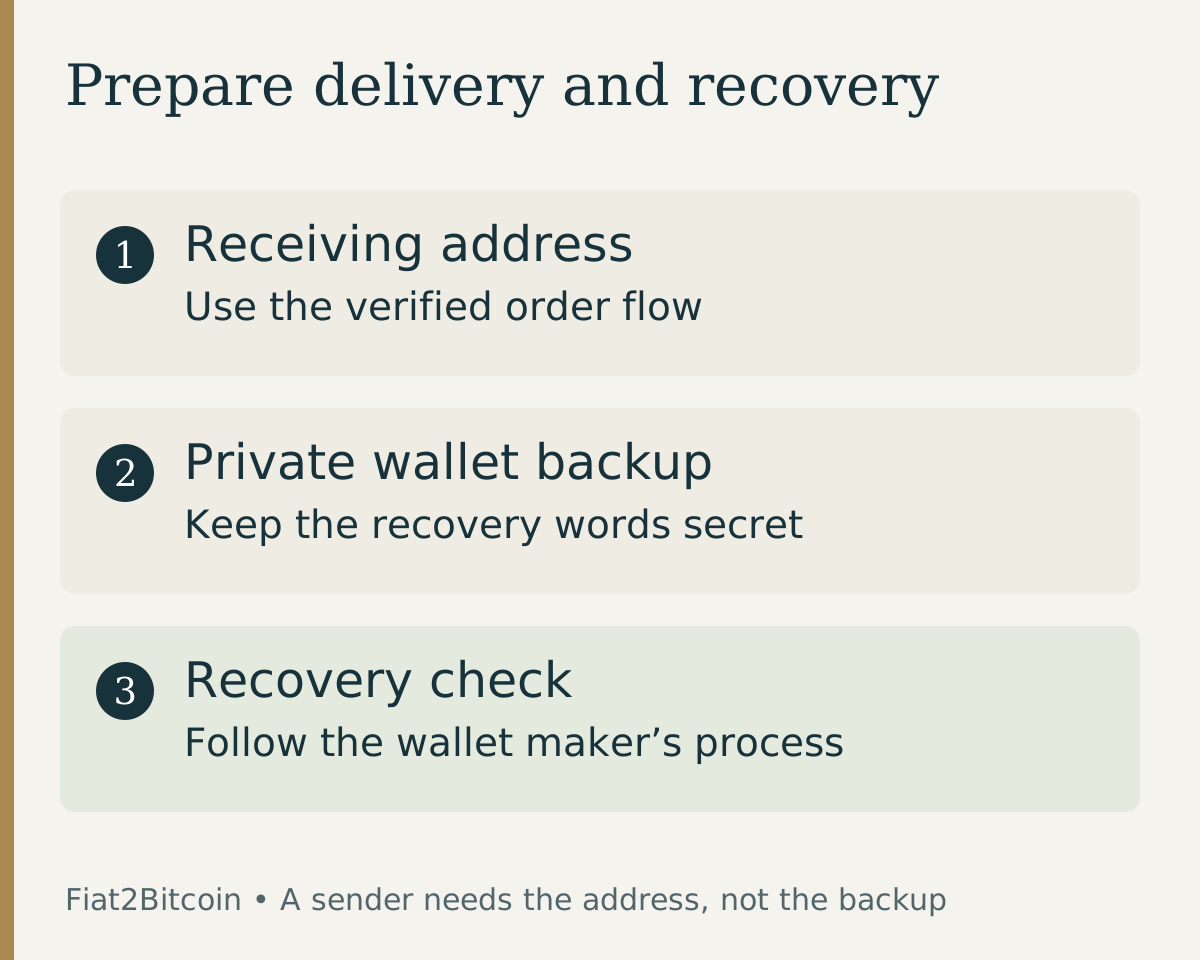
What is a crypto seed phrase?
A seed phrase is also called a recovery phrase or wallet backup. Coinbase's explanation describes it as wallet-generated words used to recover access. It is different from an individual private key, although it can lead to the keys that control the wallet.
The BIP39 specification defines one common system for turning computer-generated randomness into backup words and then a seed. It supports 12, 15, 18, 21 or 24 words. Other standards exist, so word count alone does not identify every wallet's recovery procedure.
Do not create a phrase by choosing memorable words, borrowing a published example or using a phrase supplied by a stranger. Set up the wallet through its independently verified software or device process. This article deliberately contains no example recovery phrase to copy.
A receiving address is not a recovery phrase
Scroll across the table to see all columns.
| Detail | Purpose | For Bitcoin delivery? |
|---|---|---|
| Receiving address | Identifies the destination for the intended network | Yes, through the verified order process |
| Seed or recovery phrase | Helps restore wallet control | No; keep it secret |
| Private key | Authorizes spending for the associated funds | No; keep it secret |
| Wallet PIN or app password | Protects access to a device or application | No; not a receiving address |
| Optional wallet passphrase | Can change which wallet is recovered | No; retain it under the wallet's backup plan |
An address is intended to be shared with the sender for a transaction, but public address activity can affect privacy. Share it through the intended order flow and verify the complete destination. The Taproot and native-SegWit guide explains address-format compatibility.
How should you approach seed phrase storage?
Follow the backup instructions for your exact wallet and recovery standard. Trezor's wallet-backup guidance recommends recording words accurately in order, protecting the physical backup from theft and damage, and avoiding photos, screenshots, email and other digital copies.
Plan for both unauthorized access and accidental loss. A backup that another person can read may expose funds; a backup you cannot recover after a device failure may be useless. A durable storage material does not solve a weak access plan.
Scroll across the table to see all columns.
| Failure to consider | Planning question |
|---|---|
| Device lost or broken | Can I reach a valid backup without the device? |
| Backup stolen or photographed | Who could gain access to the recovery information? |
| Fire, water or unreadable writing | What protects the record from physical damage? |
| Extra copies forgotten | Do I know where every copy is and who can reach it? |
Do not invent your own system of missing words, shuffled order or homemade fragments and assume it is recoverable. If you use a wallet's supported multi-share backup, follow that standard's setup and recovery instructions. It is not the same as cutting a normal word list into pieces.
Check the backup before relying on it
Use the wallet manufacturer's documented backup-check feature where available. For example, Trezor documents a check-backup function for Model T that compares the entered backup with the device's wallet. That example is not a recommendation to buy the device or a guarantee that another wallet has the same feature.
Do not wipe your only working wallet just to test whether an uncertain backup works. First establish the correct, supported checking procedure for the exact device or app. A search advertisement or unsolicited support message is not a verified recovery tool.
If a BIP39 wallet uses an optional passphrase, the correct words alone may recover a different wallet. BIP39 explains that different passphrases produce different seeds. Retain all required recovery information securely and do not confuse the passphrase with a device PIN.
What should be ready before Bitcoin delivery?
Confirm that the destination supports the BTC asset and network in the offer, that you control or are authorized to use the destination, and that you understand its recovery method. If the offer names a wrapped token, use the wrapped-Bitcoin compatibility guide before supplying an address.
For a debit-card purchase or credit-card purchase, complete wallet preparation before accepting delivery details in the provider's order. For ACH, a payment or withdrawal hold does not replace that check. For a wire purchase, bank instructions and the wallet destination remain separate parts of the reviewed request.
Keep the final receipt, order reference and delivery reference with your purchase records. Keep the recovery words out of those records. A provider needs enough information to identify the purchase, not the secret needed to spend from your wallet.
What if someone asks for the phrase to release your Bitcoin?
Stop and verify the situation independently. Trezor explicitly says its support will not ask for a wallet backup. A claim that you must ‘validate,’ ‘synchronize’ or disclose backup words to receive a purchase is not a normal receiving-address request.
Never enter the phrase into a purchase checkout, support chat or unexpected web form. A legitimate recovery operation belongs in the wallet's verified recovery process, with its exact device or software instructions. It is not part of resolving a card error or releasing a bank payment.
If recovery information may be exposed, treat the wallet as potentially compromised and seek the wallet maker's official guidance for securing remaining assets. Changing a local PIN alone does not invalidate a copied recovery phrase. Avoid anyone promising guaranteed recovery in exchange for the phrase or another payment.
Sources & further reading
General payment information and purchase-specific details serve different purposes. Review the current offer and terms before proceeding.
- Coinbase: Seed phrases and wallet access
- Bitcoin BIP39: Mnemonic backup and passphrases
- Trezor: Protecting a wallet backup
- Trezor: A documented backup-check example
Original Fiat2Bitcoin guide. Examples are illustrative; they are not live quotes or customer transactions. How we prepare our guides.