If a checkout specifically says electronic check, read ACH versus eCheck. That guide explains why an eCheck option and an ACH bank entry can describe the same payment, while this guide covers the broader EFT category.
“Pay by EFT” may sound like a precise instruction, but it can leave the important payment details unanswered. This guide explains industry terminology and the questions to ask about an actual offer.
For a planned ACH Bitcoin purchase or wire-transfer purchase, follow the verified process for that method. Fiat2Bitcoin purchases remain unavailable during launch preparation. An educational description does not activate a payment route.
What is the difference between EFT and ACH?
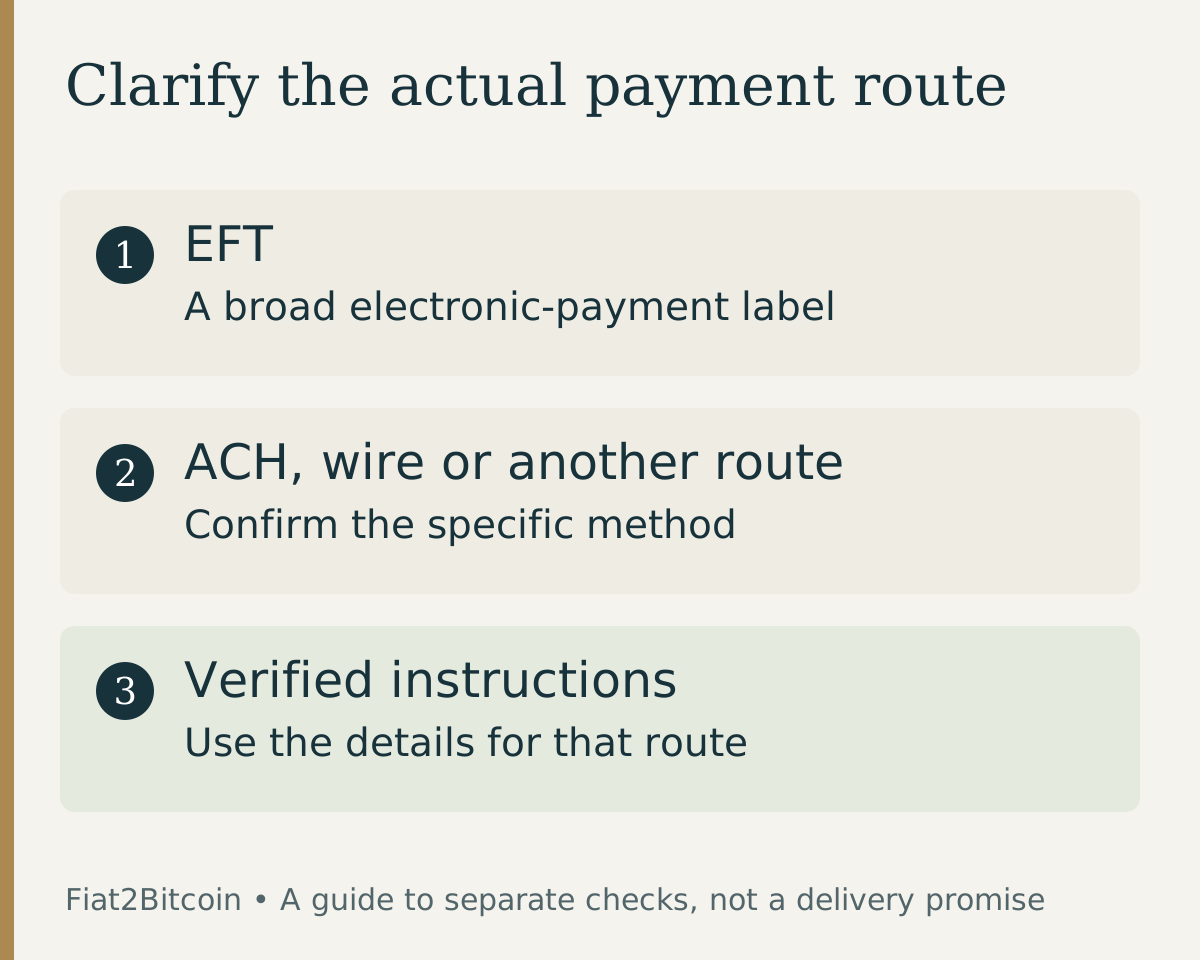
The terms describe different levels of detail. EFT expands to electronic funds transfer. ACH expands to Automated Clearing House and names a specific U.S. bank-payment network.
Nacha’s terminology explanation treats EFT as the broader category in industry usage. It also explains that some financial teams use EFT as shorthand for ACH. That shorthand is a reason to clarify an instruction, not to assume every electronic payment uses ACH.
A simple way to read a form is to ask two questions: does it describe an electronic payment in general, and does it identify the network or method that will actually move the funds? The first answer cannot replace the second.
Scroll across the table to see all columns.
| Term | What it identifies | What still needs checking |
|---|---|---|
| EFT, in general payment terminology | A broad description of transferring money electronically | The actual network, account details and authorization process |
| ACH | A payment through the U.S. Automated Clearing House network | Credit or debit direction, timing, authorization and provider conditions |
| Wire transfer | A distinct bank-transfer route | Verified wire-specific instructions, bank processing and receiving details |
| Bitcoin delivery | The separate transfer of the purchased asset | The agreed BTC amount, destination, network and delivery evidence |
Are all electronic payments ACH payments?
No. Modern Treasury’s comparison distinguishes the broad electronic-payment category from the ACH network. A card payment, for example, is not converted into ACH merely because its funds originate in a checking account.
The same customer can use a debit card for one payment and an authorized ACH debit for another. The account may be the same, but the payment details, processing and status records differ. Our ACH-versus-debit-card guide explains that purchase choice.
A bank connection is another separate event. Connecting an account, confirming its details and authorizing a particular debit are not interchangeable messages. Start with what an ACH transfer is for the underlying payment steps.
Does EFT mean ACH or wire on a payment form?
The word EFT alone may not resolve the question. For a fictional example, a payment screen says “bank transfer” and provides an account-information section. Before sending anything, ask whether it expects you to authorize an ACH debit, send an ACH credit, or initiate a wire through your bank.
That question changes what you do next. For an ACH debit, you review the collecting party’s authorization. For a wire, you follow the approved wire instructions. Do not independently send a transfer because a bank-link screen appeared, and do not reuse wire information in an ACH flow.
The ACH-versus-wire comparison covers practical differences in purchase costs, quote timing and delivery conditions. This guide identifies the terminology; that comparison helps evaluate the actual methods.
Is EFT faster or cheaper than ACH?
There is no useful universal comparison until the actual EFT method is identified. Comparing “electronic payment” with ACH can compare a broad category with one of its members. Ask for the named route and its actual terms first.
For two purchase offers, record the complete dollar outlay, any bank charges, the quoted Bitcoin quantity, quote expiry and delivery conditions. A bank payment arriving earlier does not establish that verification, purchase execution or wallet delivery is complete.
Likewise, a zero bank-transfer fee does not describe the complete Bitcoin purchase cost. Use the purchase-fee guide and the provider’s actual quote. Do not assign a fee or release deadline to every payment described as EFT.
Does the EFT label tell you which protections apply?
No. Everyday payment terminology and a legal definition can have different scope. The CFPB’s Regulation E coverage rule addresses covered consumer transfers and exclusions, including specified wire-transfer systems.
Do not conclude that all wires, credit-card transactions, commercial payments or cryptocurrency transfers have identical rights because someone calls them electronic. This guide does not decide coverage or a dispute deadline for a particular transaction.
If a payment is unrecognized or appears incorrect, contact your bank or provider promptly through its established channel. Describe the actual transaction and account, keep the records, and ask which process applies. A glossary definition should not delay reporting an issue.
What should you confirm before paying?
- Identify the provider and the particular purchase or invoice being funded.
- Ask for the exact route: ACH debit, ACH credit, wire or another named method.
- Use only the account details and instructions provided for that route and request.
- Check account eligibility, amount, currency, authorization and separately charged costs.
- Review price agreement and delivery conditions separately from bank-processing estimates.
- Retain the original order and payment references; resolve an uncertain attempt before starting another.
For ACH consent, read the authorization guide. For a manual wire request, use the instruction-verification checklist. Neither an EFT label nor an account link proves that the purchase has been funded or fulfilled.
Sources & further reading
General payment information and purchase-specific details serve different purposes. Review the current offer and terms before proceeding.
- Nacha: EFT, ACH and EDI terminology
- Modern Treasury: The difference between ACH and EFT
- CFPB: Regulation E coverage and exclusions
Original Fiat2Bitcoin guide. Examples are illustrative; they are not live quotes or customer transactions. How we prepare our guides.