For the surrounding purchase steps, see the ACH Bitcoin purchase page. This article focuses on consent. The ACH debit-versus-credit guide explains who initiates the transfer, while the provider's actual checkout determines the offered payment flow.
What is an ACH authorization?
An ACH debit authorization gives a company permission to collect money from your account within its terms. Nacha's ACH guide explains that the company initiating a debit must obtain appropriate authorization and be able to demonstrate permission.
Do not confuse an authorization with a payment receipt. Permission to initiate a debit does not show whether the bank entry was submitted, settled or returned. It also does not establish that a Bitcoin quote was accepted or that BTC was sent.
An authorization may be presented electronically as part of checkout. The important question is what the terms authorize, not whether the screen resembles a paper form. Read the text associated with the confirmation control before selecting it.
One-time, recurring or standing authorization?
Scroll across the table to see all columns.
| Type | Basic distinction | Question before agreeing |
|---|---|---|
| Single payment | Permission for a specified debit | Which purchase, amount and date does this cover? |
| Recurring payments | Debits at regular intervals without a new action each time | What is the schedule, amount rule and cancellation process? |
| Standing authorization | Advance terms under which you initiate later individual debits | What action starts each later payment? |
Nacha's explanation of standing authorizations distinguishes them from recurring debits: later entries under a standing authorization require the consumer's affirmative action. These categories describe payment permissions. Their existence does not mean a Bitcoin provider offers every type.
A saved bank account is not enough to tell you which arrangement applies. Likewise, a screen that says ‘buy again’ does not establish whether a future debit requires fresh consent or an action under an existing agreement.
What should you check on an ACH authorization form?
Review the actual provider's authorization. A generic form downloaded from a search result may not describe your order, the correct company or the offered payment process.
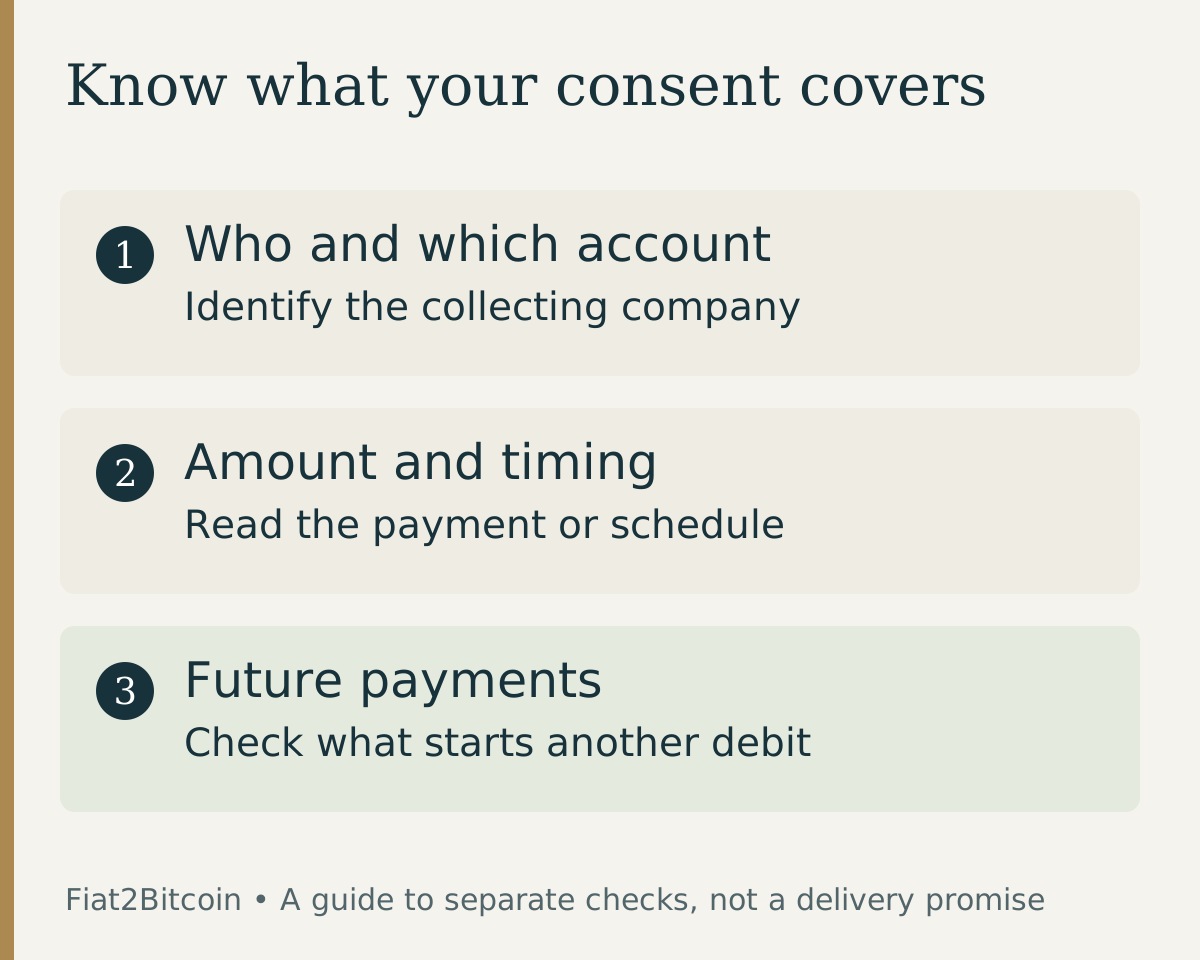
- Company: identify who is authorized to debit the account, including any disclosed payment partner.
- Account: confirm the selected bank account and its masked identifying digits.
- Amount: identify the fixed amount or the stated way a variable amount will be calculated.
- Timing: confirm the date, schedule or action that starts the debit.
- Future use: check whether consent is limited to this payment, recurring, or a standing arrangement.
- Changes and cancellation: find the instructions, notice requirements and contact route that apply.
- Evidence: save the completed authorization, its date and the related order reference.
This is a buyer's review checklist, not a substitute authorization form or a complete legal compliance specification. Ask the provider to explain a missing or unclear term before consenting. Do not fill a blank amount or schedule with an assumption.
Does bank verification give permission to take money?
Treat bank-account verification and payment consent as separate questions, even when the checkout presents them in one flow. Micro-deposit verification checks an account through small entries. A voided check or bank letter supplies account information. Neither label tells you the complete scope of any debit authorization you accepted alongside it.
Hypothetical example: you connect a bank account and approve one $500 debit for a purchase. Later you see an option for weekly purchases. Do not assume the first approval created that weekly schedule. Read the new screen and existing agreement to establish exactly what action would authorize future debits.
After approving a payment, record the bank and order statuses separately. The ACH settlement and delivery guide explains why a completed consent screen is not a Bitcoin delivery promise.
What if you want to withdraw permission?
For automatic debits from a consumer bank account, the CFPB explains how to revoke authorization: contact the company and your bank or credit union, follow their processes, and keep written records. Your bank may also recommend a stop-payment order and may charge a fee.
Revoking permission for future debits does not automatically cancel an order, erase an amount already owed or reverse Bitcoin that has been delivered. Ask the purchase provider about the existing order and ask the bank about the specific payment entry; those are separate requests.
If a debit is unfamiliar or differs from what you authorized, contact your bank promptly using its known contact details. Do not wait for a Bitcoin price change or another purchase attempt to resolve it. The CFPB advises reporting unauthorized transfers promptly because reporting deadlines affect protections.
Keep a record you can actually use
Save the terms you accepted with the order reference, authorized amount or amount rule, date and confirmation. A screenshot of a connected-account icon may not include the authorization text.
If you need to identify a bank entry later, compare its amount and date with your records. An ACH company ID identifies the originator, while an ACH trace number identifies a payment entry. Neither replaces the consent record.
Keep these records private. Share only what the bank or provider needs through its authenticated support process; a request to investigate consent never needs your wallet seed phrase.
Sources & further reading
General payment information and purchase-specific details serve different purposes. Review the current offer and terms before proceeding.
- Nacha: How ACH works and authorization
- Nacha: Standing and recurring authorizations
- CFPB: Stopping automatic bank payments
Original Fiat2Bitcoin guide. Examples are illustrative; they are not live quotes or customer transactions. How we prepare our guides.