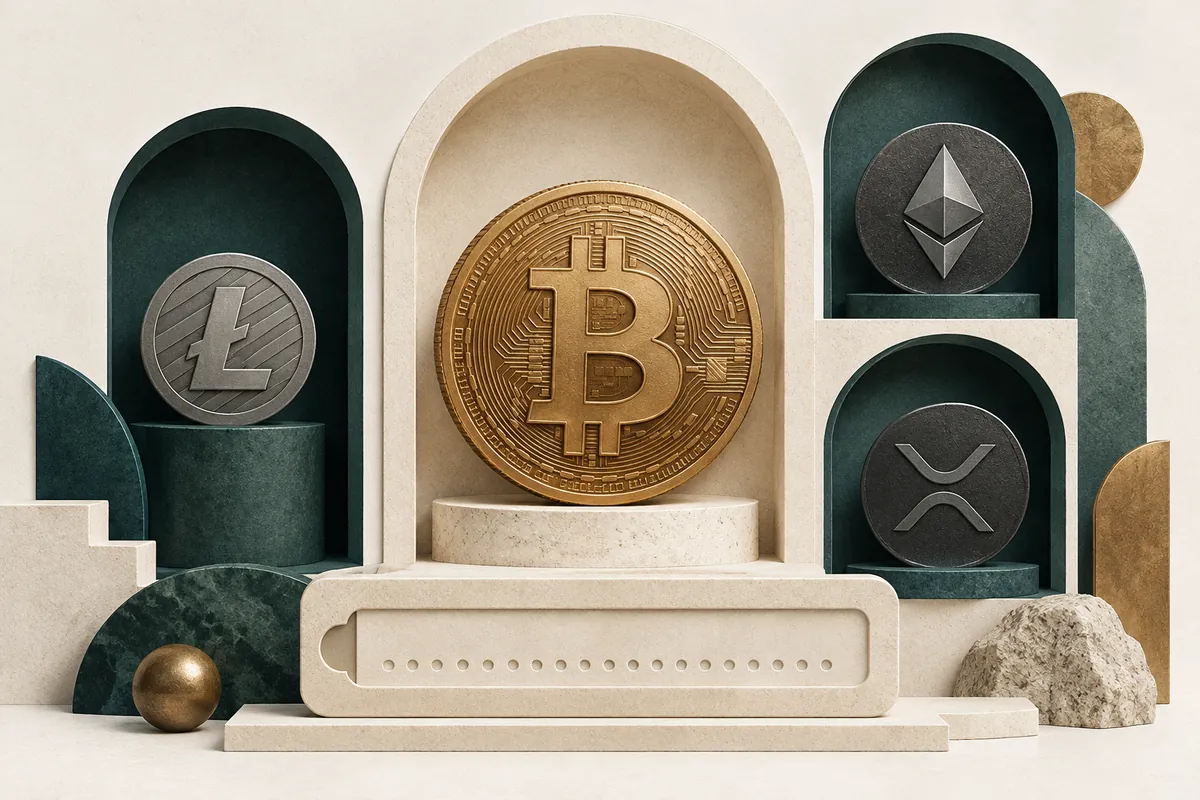
The name Satoshi Nakamoto belongs to Bitcoin’s origin story; a lowercase satoshi names a unit of BTC. Neither makes a similarly named token the same asset.
Compare Bitcoin purchase methods after identifying the asset you want. This check belongs before funding an ACH purchase or sending a purchase wire. Fiat2Bitcoin remains prelaunch and does not advertise BCH, BSV or wrapped-token purchase services.
What do people mean by different types of Bitcoin?
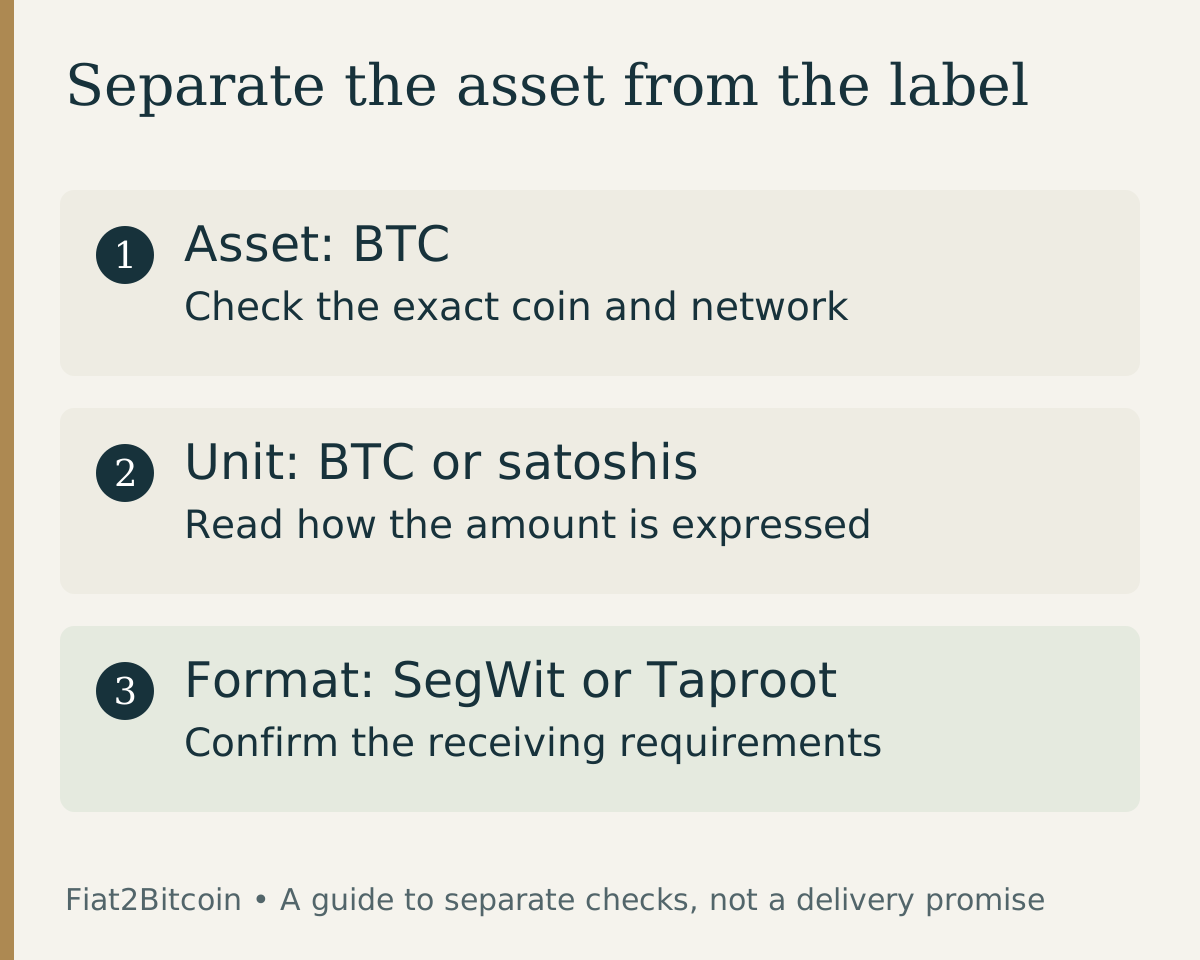
The phrase mixes several different questions: which cryptocurrency is being sold, how its amount is displayed, and which wallet format receives it. Keeping those questions separate prevents a name match from becoming an asset-selection mistake.
Scroll across the table to see all columns.
| Label | What it refers to | What to check |
|---|---|---|
| Bitcoin / BTC | The Bitcoin asset | BTC and the intended delivery network |
| Bitcoin Cash / BCH | A separate cryptocurrency and blockchain | BCH-specific support and receiving instructions |
| Bitcoin SV / BSV | A separate cryptocurrency and blockchain | BSV-specific support and receiving instructions |
| Satoshis / sats | Smaller units of BTC | The unit used for the quoted amount |
| Native SegWit / Taproot | BTC address and account formats | Compatibility with the sending service |
| Wrapped Bitcoin products | Tokens representing Bitcoin through a separate arrangement | Exact token, network and custody/redemption terms |
| Bitcoin ETP shares | A security providing investment exposure | The product prospectus and brokerage record |
This is a terminology guide, not a ranking of investments or a complete list of every token that uses Bitcoin in its name. A different asset's lower unit price does not make it a discounted version of BTC.
Are BTC, BCH and BSV interchangeable?
No. Each has its own asset identity and network records. Bitcoin Cash's project site describes its chain splitting from Bitcoin in 2017. BSV's introductory documentation identifies BSV as a separate blockchain and compares it with BTC. Those sources explain the names; their promotional performance claims are not purchase guarantees.
If you intend to buy BTC, a checkout showing BCH or BSV is a different purchase. Do not approve it merely because Bitcoin appears somewhere in the asset name. Confirm the full name and ticker in the actual order.
Provider support is also asset-specific. For example, Coinbase's BSV notice says it stopped supporting BSV in January 2024. That is an attributed provider example, not a statement about every platform or a reason to use a different asset.
Do not send one asset using another asset's receiving instructions or assume an error will be recoverable. Ask the receiving service to confirm the exact asset and network before authorizing a transfer.
Are satoshis, SegWit and Taproot different coins?
A satoshi is a unit of Bitcoin: one BTC equals 100,000,000 satoshis, as defined in Bitcoin.org's vocabulary. Changing a wallet display from BTC to sats does not create a different asset. The fractional-purchase guide covers amounts and minimums without requiring you to buy a whole coin.
Native SegWit and Taproot concern how BTC outputs and receiving addresses are represented and used. Trezor's account-type guide presents them as Bitcoin account choices. They are not separate tokens that you must buy at different market prices.
Use the Taproot-versus-native-SegWit guide for the address comparison. Selecting another BTC account format is a different decision from selecting BCH, BSV or a token on another blockchain.
A five-field check before you fund a purchase
- Asset: Does the order name the exact cryptocurrency you intend to buy?
- Ticker: Does the abbreviation match that asset rather than a similarly named alternative?
- Network: Does the delivery network match what the receiving wallet or account supports?
- Amount and unit: Is the quote in dollars, BTC, satoshis, another token or investment shares?
- Destination and terms: Are the receiving instructions, costs and delivery conditions clear?
For a hypothetical example, a buyer wants BTC in a native Bitcoin wallet but opens an offer for BCH because its per-coin price looks lower. The error exists before any payment is made: the offer names a different asset. Changing the payment from ACH to a wire would not correct it.
If the label is unclear, ask the provider to identify the asset and network in writing before funding. If you have already paid, preserve the order and payment records and contact the provider through its verified channel. Do not send a second payment to try to fix an unresolved order.
For a visual introduction to the digital asset and its records, read what Bitcoin looks like to a buyer. For costs after the asset is clear, use the Bitcoin purchase-fee checklist.
Sources & further reading
General payment information and purchase-specific details serve different purposes. Review the current offer and terms before proceeding.
- Bitcoin Cash: Project and chain history
- BSV Code Academy: BSV and BTC terminology
- Coinbase: BSV support notice
- Bitcoin.org: Bitcoin units
- Trezor: Bitcoin account types
- WBTC: Bitcoin backing and supported networks
- SEC Investor.gov: Bitcoin and Ether ETPs
Original Fiat2Bitcoin guide. Examples are illustrative; they are not live quotes or customer transactions. How we prepare our guides.