Start with the Bitcoin purchase-method comparison when you are ready to compare payment routes. A debit-card purchase or credit-card purchase pays for a digital asset, not a metal coin. Fiat2Bitcoin remains prelaunch; the examples here are educational.
Does a Bitcoin have a physical appearance?
Bitcoin exists through records maintained by its network. It is not a particular image, downloadable coin-shaped file or object that must be shipped to you. Bitcoin.org's FAQ explains that Bitcoin is virtual and that its balances are maintained across a distributed network.
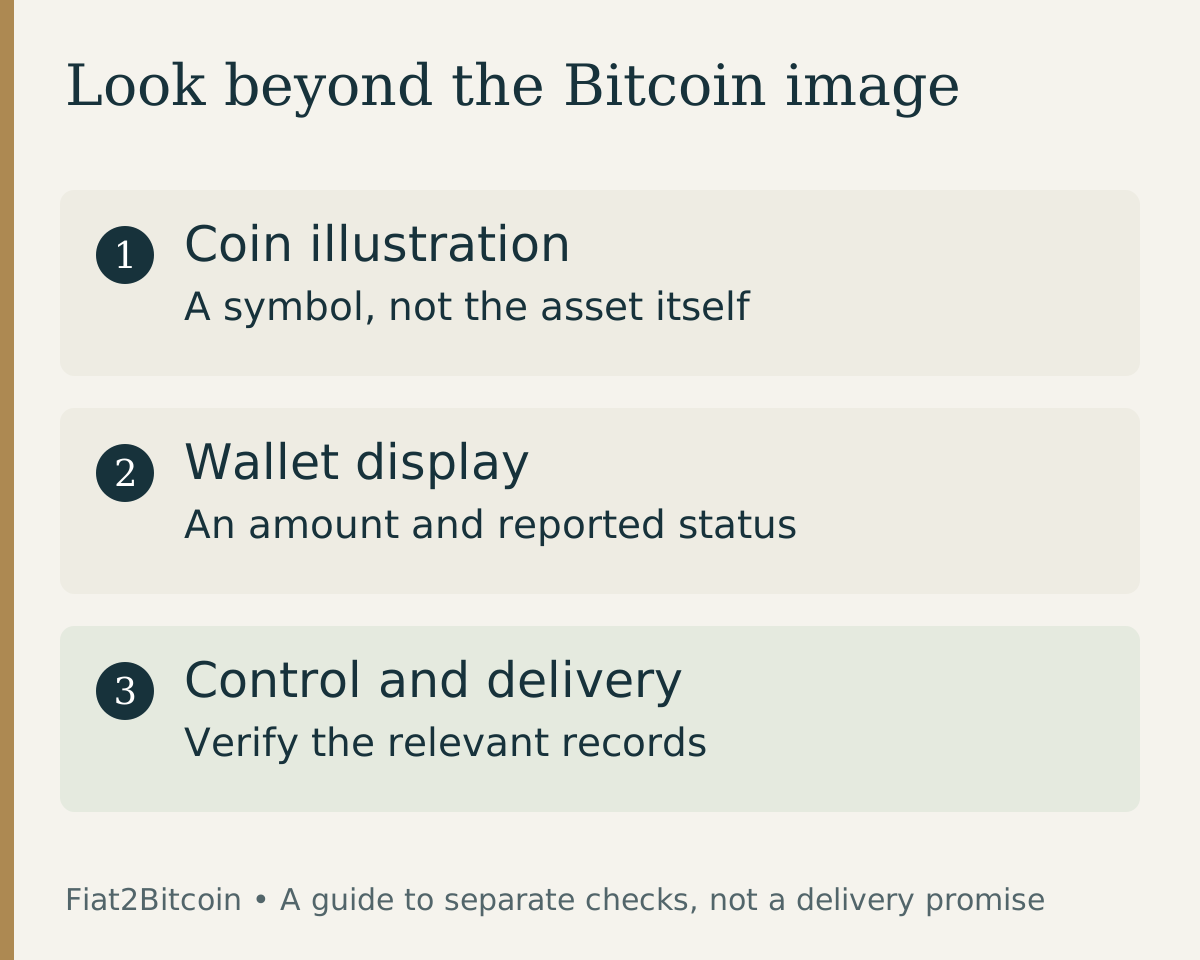
The orange symbol and gold-colored coins used in articles make the subject easy to recognize. They do not show the asset itself. A site can display the Bitcoin logo without selling BTC, just as a photograph of cash does not establish a bank balance.
Buying Bitcoin therefore calls for different checks from buying a collectible. Identify the asset and purchase terms, confirm where it will be held or delivered, and keep the relevant records. A glossy image is not part of that evidence.
What are you looking at in a wallet or purchase screen?
Scroll across the table to see all columns.
| What you see | What it represents | What it cannot prove by itself |
|---|---|---|
| Bitcoin logo or coin illustration | A visual symbol | That the site holds or sells BTC |
| BTC balance | An amount displayed by the software | That you can spend or withdraw it |
| Receiving address | A destination for a supported payment | That a purchase has been sent |
| Receiving QR code | Data the wallet can scan instead of typing | That the destination belongs to you |
| Transaction ID and status | A reference to a transaction and its reported state | The outcome of a separate bank or card payment |
Bitcoin.org's receiving guidance describes using a wallet's QR code to receive payments. The code is a way to present information; it is not a container holding a coin. Check the decoded destination in the verified sending flow, not just whether a QR code scans successfully.
If an address begins with unfamiliar characters, our Taproot and native SegWit comparison explains two BTC address formats. A recognizable prefix is useful context, but it is not a substitute for verifying the full destination.
Does the wallet hold the Bitcoin image or a secret key?
The Bitcoin developer guide explains that wallet software uses keys to receive and spend Bitcoin. Software may also display transaction information without having the keys required to spend it. That is why seeing an amount on a screen is different from controlling it.
With a self-custody wallet, protecting the private keys and recovery information is essential. With an account operated by a provider, check who controls the keys and what withdrawal conditions apply. A login screen and a self-custody wallet do not establish the same relationship to the funds.
A recovery phrase or private key is not a receiving address. Do not provide either to a seller or support agent to receive a purchase. Follow the wallet maker's verified setup and backup guidance; this article does not generate keys or ask you to enter them.
What about physical Bitcoins sold as collectibles?
Some objects are decorative souvenirs. Others have been designed to carry private-key information associated with a Bitcoin address. The developer guide's section on mini private keys describes their use in physical Bitcoin tokens. The metal object and any Bitcoin associated with its key remain different things.
A coin's engraving, packaging or claimed face value does not establish an available BTC balance or exclusive control of a key. If someone else retained the key, possession of the object alone would not prove that only you can spend the associated funds. A visible balance could also have changed since a photograph was taken.
This guide does not authenticate collectibles or estimate their resale value. If your aim is to buy spendable BTC, make sure you are reviewing a digital-asset purchase rather than a souvenir listing. The types-of-Bitcoin guide also explains why similar names and symbols can refer to different assets.
What should you check after a Bitcoin purchase?
- Keep the accepted quote or receipt showing the exact asset, Bitcoin amount, costs and order reference.
- Open your own verified wallet or provider account directly. Check the selected asset and the unit beside the balance.
- If the provider reports an on-chain delivery, obtain its transaction reference and compare the destination and amount with the intended purchase.
- Check the receiving wallet's status and applicable confirmation requirements separately from your bank or card activity.
- If the records disagree, investigate the original order before making another payment.
For example, an illustrative receipt for 0.0025 BTC and a wallet showing 250,000 sats can describe the same quantity. This is a unit conversion, not a live price or a claim that any purchase has arrived. Our fractional Bitcoin guide explains the units and purchase minimums.
Be cautious of a screenshot supplied as the only proof of a balance. The FTC's cryptocurrency scam guidance describes fake investment websites and demands for additional money to withdraw supposed funds. Use your own verified records, and treat an unexpected demand to pay more to unlock a balance as a reason to stop and investigate.
If a card charge exists but delivery is unclear, use the pending-payment guide to separate the payment, purchase and Bitcoin records.
Sources & further reading
General payment information and purchase-specific details serve different purposes. Review the current offer and terms before proceeding.
- Bitcoin.org: Bitcoin's virtual nature
- Bitcoin.org: Receiving Bitcoin and QR codes
- Bitcoin developer guide: Wallets, keys and physical tokens
- FTC: Cryptocurrency scams and fake investment sites
Original Fiat2Bitcoin guide. Examples are illustrative; they are not live quotes or customer transactions. How we prepare our guides.