
What do the examined Bitcoin pages say?
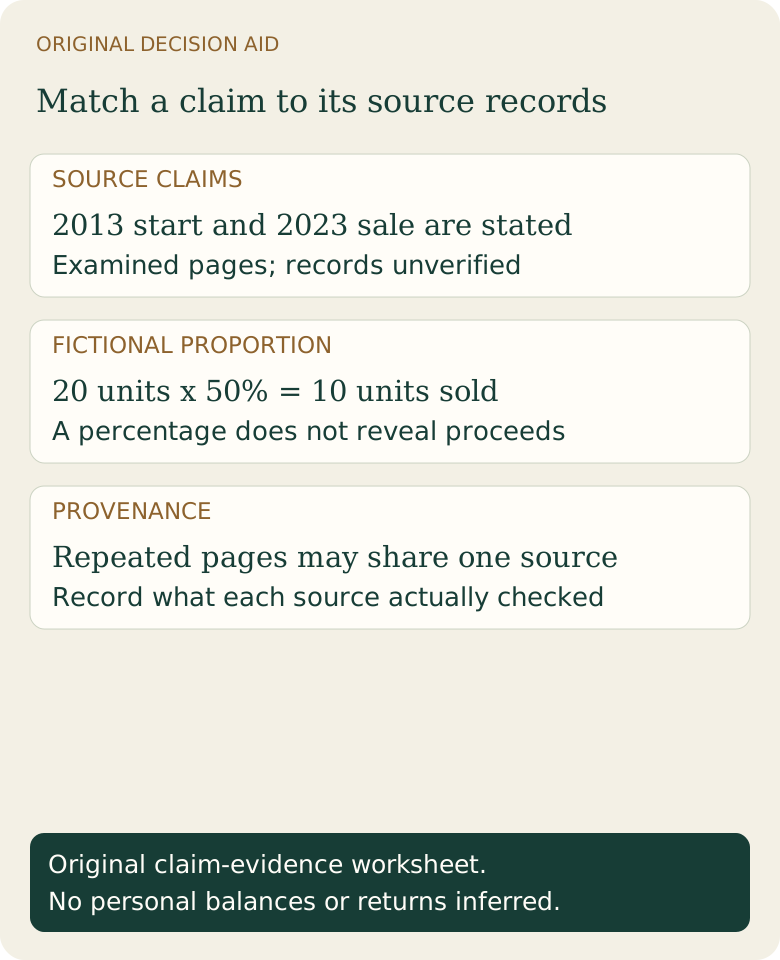
We retrieved the homepage and Crypto Journey page at abrahamquirosvillalba.com on November 18, 2026. Both present a story about Bitcoin investing beginning in 2013 and a sale of half the holdings in 2023. The relevant evidence here is that these identified webpages contain those statements.
The pages do not, by themselves, establish an authenticated investing history for this review. We have not verified ownership of the website, transaction records, acquisition costs, sale proceeds or a complete performance record. The article therefore attributes the account to the website instead of presenting its investment narrative as an independently established biography.
This is a bounded examination of specified public pages. It does not resolve the identity of every person with the same name, establish a net worth, or determine whether anyone is authorized to provide a regulated service. Other writers or profiles with a similar name need separate identity evidence before their work or credentials can be connected to this account.
What evidence would answer each question?
Use this original map to identify what a source can support. A statement may be relevant while leaving the underlying event unverified. Keep the status and the reason together so a later summary does not accidentally turn an attributed claim into a fact.
Scroll across the table to see all columns.
| Statement or question | What the reviewed source establishes | Evidence question still open |
|---|---|---|
| Investing began in 2013 | The website states that starting year | Which authenticated, relevant records establish the event? |
| Half the holdings were sold in 2023 | The website states a sale proportion and year | What quantity, dates, proceeds and costs would support the transaction claim? |
| The story demonstrates strong performance | A narrative describes investing experience | Is there a complete, consistently measured performance record? |
| A profile belongs to a particular professional | A name appears on a page | What reliably connects that exact person, domain and claimed role? |
| A service is suitable or permitted | A page describes a service or interest | Who provides the actual service, under which agreement and applicable permissions? |
How many independent sources are there?
Two pages on the same website can be two useful references without being two independent confirmations. The homepage and Crypto Journey page repeat the core investing account; count their shared provenance when assessing corroboration.
For a clearly hypothetical example, imagine five webpages repeating the same investment story. Three reproduce Publisher A’s statement and two summarize those reproductions. That is five pages carrying one originating account, not five independently verified transaction records. This example is a source-counting exercise, not a claim about the provenance of any particular search result.
An independent source would still need to identify what it actually checked. A source confirming a person’s publishing work, for example, would not automatically establish their Bitcoin holdings or returns. Match the evidence to the exact claim rather than transferring credibility between unrelated facts.
Why does selling 50% not reveal a profit or fortune?
Consider a fictional Investor A with 20 units of an asset immediately before a sale. Selling 50% would mean 20 × 0.50 = 10 units sold and 10 units retained, assuming no other changes. The calculation reveals a proportion of that invented balance. It reveals neither a sale price nor a profit.
Now give a different fictional Investor B a balance of 2 units. Selling 50% would mean 1 unit sold and 1 retained. The same percentage applies to very different quantities. Neither example describes the named website’s actual balances, transactions or wealth.
To calculate a realized result, additional information would be needed, including the quantity actually disposed of, relevant acquisition costs, sale proceeds, fees and the accounting or tax method where applicable. A year and percentage supply none of those amounts. This guide makes no personal financial estimate and gives no tax determination.
Scroll across the table to see all columns.
| Invented starting balance | 50% sold | Balance retained |
|---|---|---|
| Investor A:20 units | 10 units | 10 units |
| Investor B:2 units | 1 unit | 1 unit |
Can a Bitcoin transaction prove an identity or track record?
Bitcoin.org explains that Bitcoin transactions are public and that addresses can be connected through transaction activity. A network record still needs context to connect a particular transaction with a person, agreement or claimed investing result.
A transaction ID can help inspect a specified transfer’s network outputs and status. It does not, by itself, establish that a named individual controlled the relevant account, that a transfer was a sale, what a counterparty paid, or whether the individual’s entire investing record was profitable. Our Bitcoin transaction-ID guide explains the narrower transfer question.
Do not ask anyone to disclose private keys, seed phrases, passwords or private account information to make a public profile appear more persuasive. This worksheet records public source references and unresolved questions; it is not a request for private financial records.
What should a reader do with an unresolved claim?
Keep it attributed and mark the particular evidence gap. The downloadable Bitcoin-claims worksheet separates source location, statement, provenance, corroboration and status. Its numeric examples are fictional and contain no personal account data.
For an actual proposed investment or advisory relationship, identify the precise person or firm and the service. The CFTC’s digital-asset guidance recommends checking people and firms before trading. The applicable register, agreement and permissions depend on the actual activity and jurisdiction; this review makes no registration finding for the named subject.
If you are comparing a purchase route, review the actual operator, custody arrangement, fees and receiving requirements. Our Bitclassic source-comparison guide examines a different website’s article-versus-service question, and our custody guide explains who controls keys. A person’s story is not a substitute for the terms of your own transaction.
Sources & further reading
These sources explain the payment systems and rules discussed in this guide. For your purchase, check the provider’s current offer and terms.
- Examined website: homepage statements
- Examined website: Crypto Journey statements
- CFTC: checking digital-asset people, firms and claims
- Bitcoin.org: public transactions and privacy
Source-page statements remain attributed claims. The holdings examples are fictional and do not describe the named subject’s balances, proceeds, returns or wealth. How we prepare our guides.