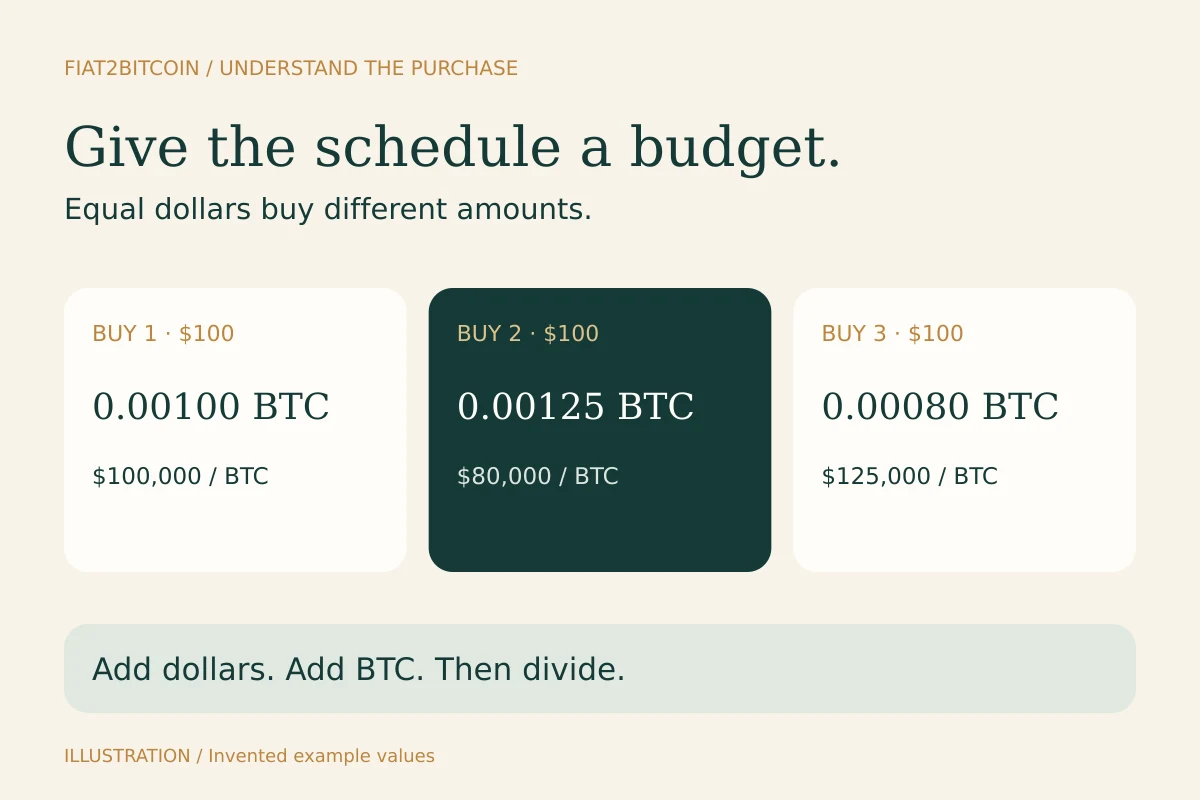
You see Bitcoin at one price on a chart, then a higher price when you enter $100 at checkout. That difference needs an explanation before you pay. Start with the type of price you are reading, then compare the complete quote. The examples here use invented prices so you can follow the calculation; they are not current offers.
Two meanings of spread worth separating
In an order book, the bid–ask spread is the gap between the highest buying bid and lowest selling offer at that moment. A chart might instead display the last trade or an index assembled from several markets. That number describes its own market and time.
A retail purchase service may also use the word spread for a price adjustment built into its checkout rate. Kraken’s fee schedule describes a spread within its Instant Buy/Sell price. The rate shown for one product can differ from its order-book trading product. Read the pricing rules for the exact service and payment route you selected.
A chart-versus-checkout difference can reflect several things together: the reference market, timing, liquidity, a provider price adjustment and charges inside the displayed amount. Ask for the rate and cost breakdown before naming the whole difference a spread.
A $100 example: the $1 fee loses to the $4 fee
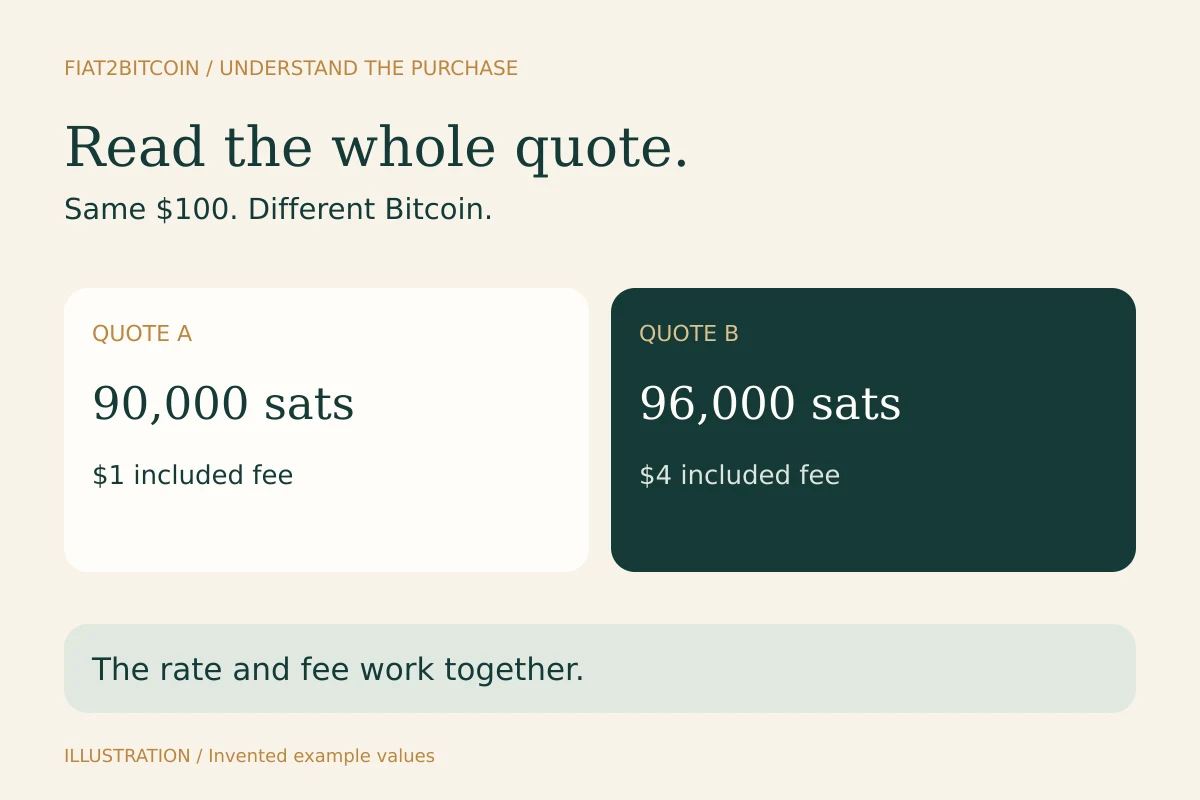
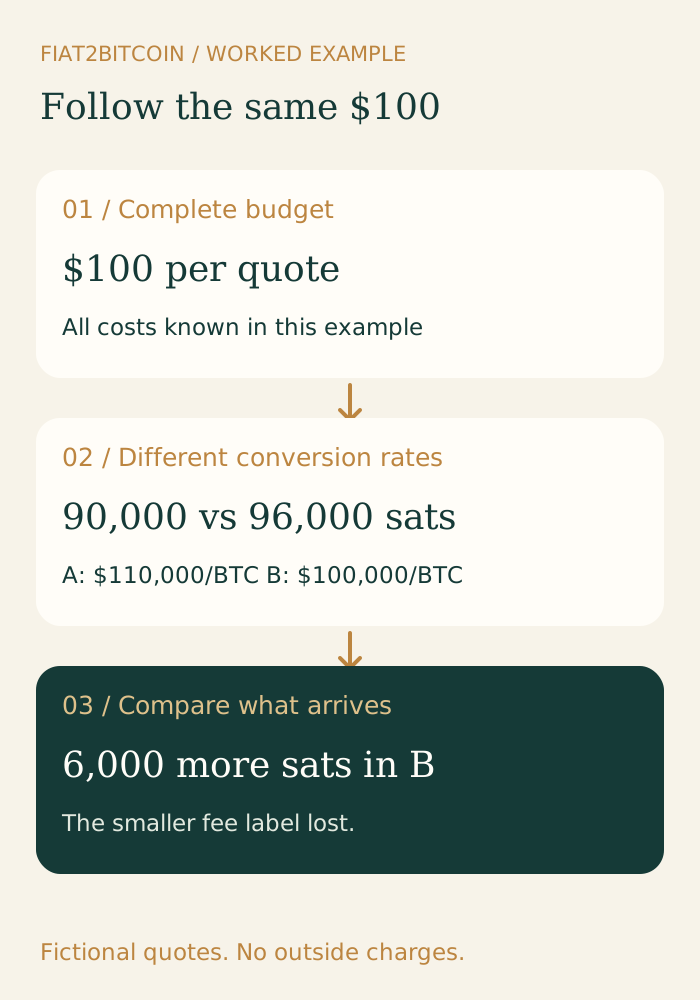
Both fictional offers below spend exactly $100, include their stated fee inside that budget and deliver native BTC to the same destination. For this arithmetic example, separate bank charges and any later transfer charges are zero. The invented comparison reference is $100,000 per BTC at the same time.
Scroll across the table to see all columns.
| Record | Quote A | Quote B |
|---|---|---|
| Complete dollars spent | $100 | $100 |
| Included fee | $1 | $4 |
| Dollars converted after that fee | $99 | $96 |
| Offered conversion rate | $110,000 per BTC | $100,000 per BTC |
| Final Bitcoin | 0.00090000 BTC | 0.00096000 BTC |
| Satoshis delivered | 90,000 sats | 96,000 sats |
Quote A converts $99 ÷ $110,000 = 0.00090000 BTC. Quote B converts $96 ÷ $100,000 = 0.00096000 BTC. B delivers 6,000 more sats even though its visible fee is larger. Its rate advantage outweighs that fee difference in this example.
The offered rate in A is 10% above the invented reference. Its complete purchase cost per BTC is $100 ÷ 0.0009 = $111,111.11. Those two percentages answer different questions: the complete unit cost includes the separate fee as well as the offered rate.
Use complete dollars divided by final BTC
Write down the total amount leaving your bank/card balance, including a charge paid outside checkout when you know it. Then write down the final Bitcoin you expect at the destination you actually want. Divide complete USD spent by that BTC amount to get an effective USD-per-BTC purchase cost.
When both purchases spend the same complete budget and finish at the same destination, more final BTC means a lower cost per BTC. If one offer first credits an account and requires a separately charged withdrawal, include that second step. The network-fee and withdrawal-fee guide explains the two records.
If your issuer might add a cash-advance charge, foreign-currency charge or interest that you cannot yet calculate, keep it marked as unknown. A precise checkout calculation can still be an incomplete purchase budget. The complete quote worksheet handles separately paid charges and unequal spending amounts.
Avoid adding an included cost twice
Some providers show an included spread or fee for explanation. That amount may already affect the rate or the final BTC. Adding it to the total again would overstate what you spend. Establish whether the displayed total includes it and whether it has already been deducted from the BTC calculation.
Coinbase’s published disclosures explain that simple-buy spreads appear in the quoted price and can be inspected in the order preview. That is an example of how one service presents its pricing; your selected provider’s own preview determines its actual treatment.
Keep three labels distinct in your notes: included in this total, paid separately, and unknown. If the preview is unclear, ask support: ‘For this quote, what is the complete charge, what BTC reaches my destination, and which displayed costs are already included?’
Compare offers under matching conditions
Use the same USD amount, actual country/state, payment method, asset and receiving network. Collect quotes close together and refresh an expired estimate. A card offer in one country and a bank-funded offer somewhere else answer different buying questions.
Fiat2Bitcoin’s automatic provider comparison retrieves available estimates through its current Changelly integration. It shows expected BTC, reported included fees and retrieval time. It does not supply a separately verified spread measurement or assume an outside issuer charge is zero. Available providers and offers depend on the actual conditions you choose.
A service advertising zero trading fees still needs a complete quote comparison. A subscription, pricing adjustment or withdrawal can change the amount you ultimately receive. Compare the specific route rather than a headline about an entire company.
What to save before confirming
Keep the quote’s time, expiry, USD total, expected BTC, payment method and named provider. Note the receiving network and whether delivery is to your own wallet or an account that needs a later withdrawal. A short screenshot of the actual review screen can help you ask a focused question if the final receipt differs.
For a completed order, compare the provider receipt with the actual payment and receiving record. A price seen after the purchase is a new observation. Use the quote accepted for that order when asking the provider to explain a discrepancy, and keep card numbers, recovery words and identity documents out of a public post.
Sources & further reading
These sources explain the payment systems and rules discussed in this guide. For your purchase, check the provider’s current offer and terms.
Published by Fiat2Bitcoin. Worked examples use fictional figures and records; they are not current prices or customer transactions. How we prepare our guides.