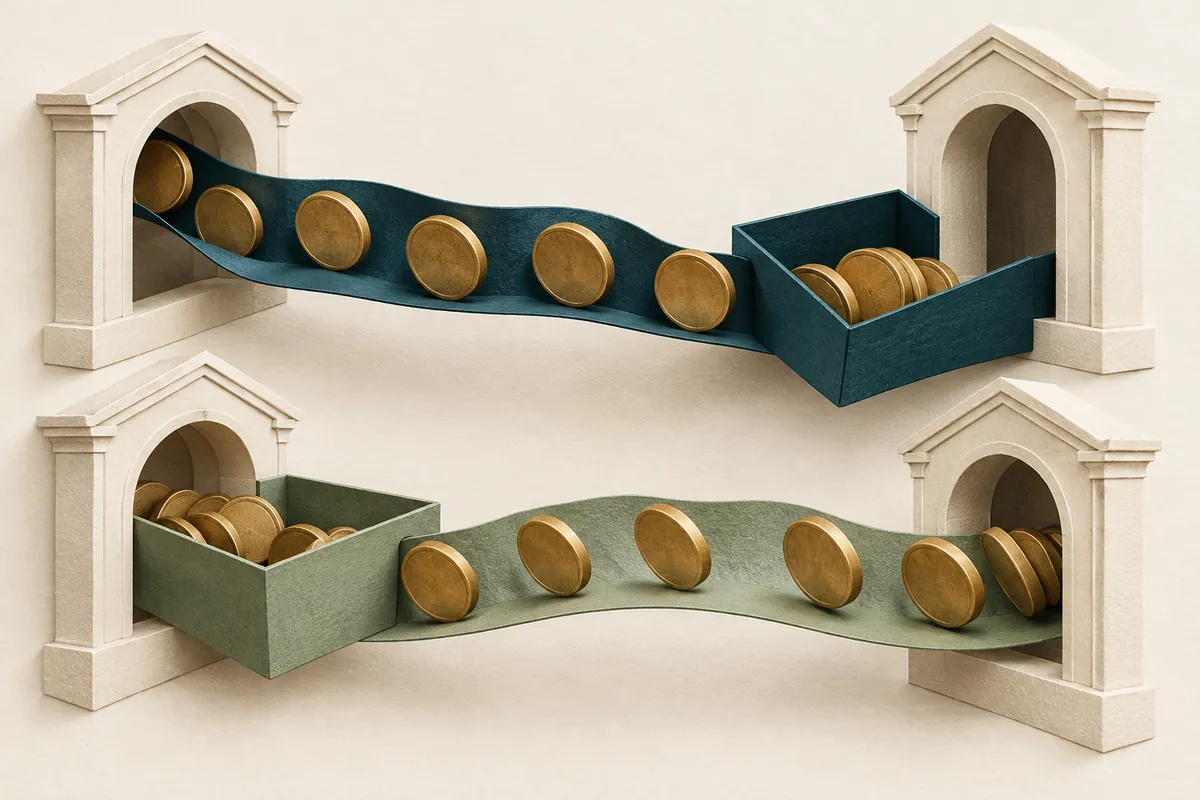
A payroll form and a wire request can both ask for routing and account numbers. The field names look familiar, but the sender is arranging a different kind of payment. Before copying details from an old form, establish which route the new payment will use.
What is the difference between direct deposit and a wire transfer?
Direct deposit is a familiar way to receive wages, benefits or other payments into your account. The Federal Reserve’s ACH overview identifies payroll, Social Security benefits and tax refunds as typical ACH credit transfers. The payer initiates a credit that moves through the ACH network toward the receiving account.
A bank wire is arranged through the bank’s wire service. Fedwire is one U.S. wire system; Federal Reserve Financial Services describes it as a same-day funds-transfer service. Ask the sender which wire route it is using, especially for an international payment.
Chase’s direct-deposit explanation describes employer payments as either single or recurring. The useful distinction is the payment process, rather than simply how often money arrives.
How do setup, timing and charges compare?
Use the sender’s confirmed method and your bank’s receiving instructions to fill in the details below. For a payroll payment, the employer’s schedule matters. For a wire, ask the sending bank about its submission deadline and the particular transfer’s status.
Scroll across the table to see all columns.
| Detail | Payroll direct deposit | Bank wire |
|---|---|---|
| Who arranges it? | Employer or payroll provider after enrollment | Sender using its bank’s wire service |
| Which details do you provide? | Bank-issued ACH/direct-deposit details and the payroll form’s required fields | Current incoming-wire instructions for the receiving account |
| Which date do you confirm? | Payday, the payment’s effective date and the bank’s availability policy | Proposed send date, bank cutoff and expected receipt |
| Which charges do you check? | Any applicable receiving-account or payroll-service terms | Sending, receiving and any applicable intermediary or currency-conversion charges |
| Who starts a missing-payment inquiry? | Payroll team or other initiating organization, alongside your receiving bank | Sending bank, with the recipient checking its receiving-bank record |
For a broader comparison of payment routes, see ACH versus wire transfer. That guide also covers bank debits, while this page focuses on identifying and receiving a direct deposit or wire.
Can you use a direct-deposit form to receive a wire?
Get the bank’s instructions for the method being sent. A direct-deposit form provides details for that setup; a wire may need a wire-specific routing number, recipient address or additional bank information. Ask the receiving institution to confirm the fields before the sender schedules the payment.
For example, Bank of America’s routing-number FAQ distinguishes routing information used for ACH/electronic payments from wire-transfer information. Other institutions may use the same identifiers for some routes. Follow the bank’s labels for your account instead of choosing a number by its appearance.
When the wire instructions name an intermediary or a final-credit reference, give the sender the complete bank-issued instructions. The for-further-credit guide explains how a payment can need details for the final recipient after reaching the first receiving account.
Which one reaches your account sooner?
Compare the dates for your particular payment. A payroll deposit is normally scheduled around payday; a wire follows the bank’s sending process and the receiving institution’s handling. Ask when the sender submitted the payment, which date it is meant to take effect and when the receiving bank expects the funds to be available.
The CFPB’s payroll direct-deposit guidance says funds must be available by the next business day after the business day the bank or credit union received the deposit. Many institutions make payroll funds available earlier. Have your bank explain its policy and the deposit record if the timing looks wrong.
For a wire, ask the sending bank for the applicable cutoff and confirmed send date. The wire-timing guide helps separate submission, bank processing and any later purchase review. Keep the sender’s estimate attached to the stage it describes.
An example: the same amount, two different records
Hypothetical example: you expect $1,800 in wages on Friday. Separately, someone plans to wire you $1,800 on Tuesday. The matching amounts are a reason to keep the sender and payment method attached to each record, especially when you ask the bank to investigate.
Scroll across the table to see all columns.
| Expected payment | Record to request | Question to resolve |
|---|---|---|
| Friday payroll direct deposit | Payroll confirmation, effective date and available ACH trace details | Was this payroll credit sent to my intended account for that payday? |
| Tuesday bank wire | Sending-bank confirmation, send date and applicable wire reference | Was this wire released, and can the receiving bank locate and credit it? |
If one payment arrives, match its sender, date and reference to the expected record before closing the other inquiry. Keep any separately posted charge with the payment it relates to.
Who should you contact if the payment is missing?
For payroll, start with the employer or payroll team and your bank. Nacha’s consumer FAQ points consumers to the initiating organization and financial institution for individual payments. If a direct deposit went to the wrong account or bank, it recommends contacting the company or agency that sent it.
For payroll, you can ask: “My expected pay for [payday] was [amount]. Please confirm whether it was sent, its effective date, the destination account’s last four digits and any ACH trace details available for my bank.” The ACH trace-number guide explains that reference.
For a wire, ask the sender to contact its bank: “Please confirm whether the [amount] wire requested on [date] has been sent, the confirmed send date and the tracking reference the receiving bank should use.” An IMAD may identify a Fedwire message when that system was used. The wire-tracking checklist covers the wider investigation.
How does this distinction matter when buying Bitcoin?
A paycheck deposited into your own bank account gives you funds to consider for a later purchase. A provider collecting an authorized ACH debit from that account is arranging a separate payment. Review that purchase’s amount, authorization, settlement and delivery terms in the ACH buying guide.
If the purchase calls for a bank wire, use the instructions issued for the reviewed request. The wire-transfer buying guide explains the separate bank-instruction, funding-review, quote and wallet-delivery steps. Fiat2Bitcoin’s public purchase service remains in launch preparation; an existing payment through another provider should be followed through that provider’s support process.
Sources & further reading
General payment information and purchase-specific details serve different purposes. Review the current offer and terms before proceeding.
- Federal Reserve Board: ACH credits and direct-deposit examples
- Federal Reserve Financial Services: Fedwire Funds Service
- Chase: Direct deposit, enrollment and payroll scheduling
- Bank of America: Routing-number and payment-method distinctions
- CFPB: Availability of payroll direct-deposit funds
- Nacha: Consumer ACH questions and missing direct deposits
Original Fiat2Bitcoin guide. Examples are illustrative; they are not live quotes or customer transactions. How we prepare our guides.