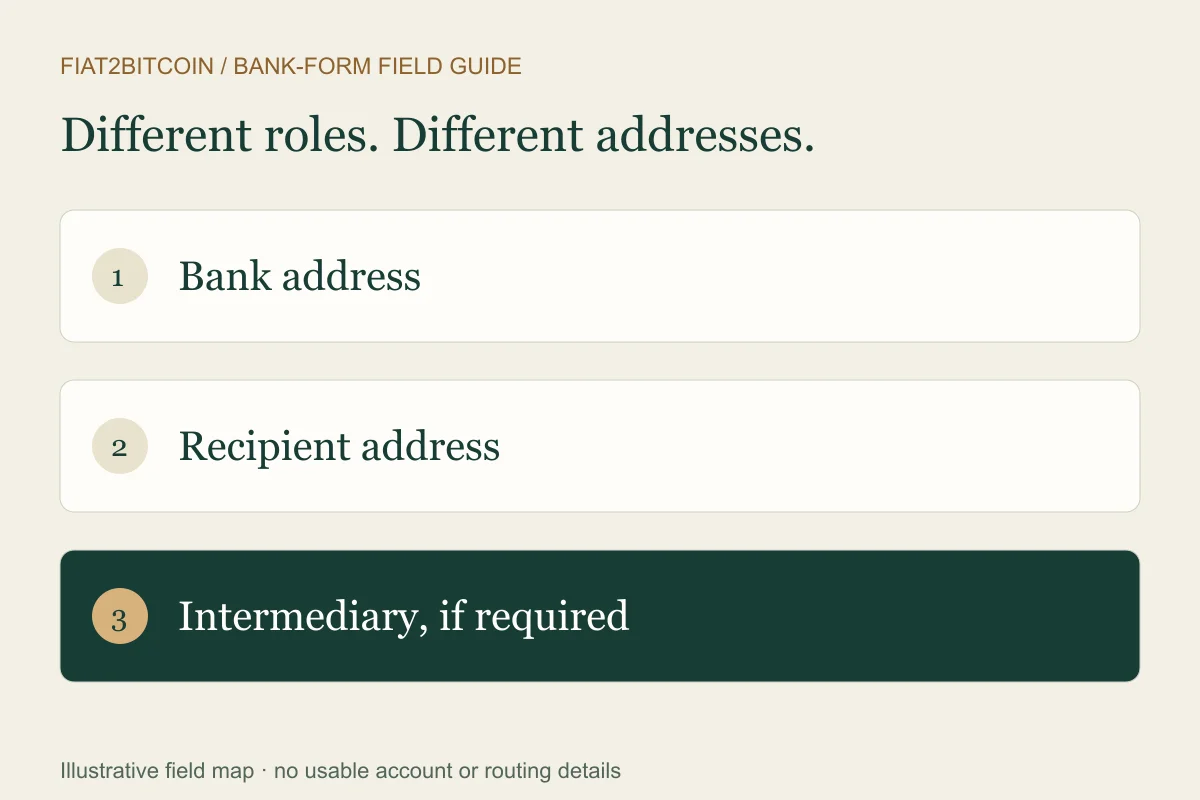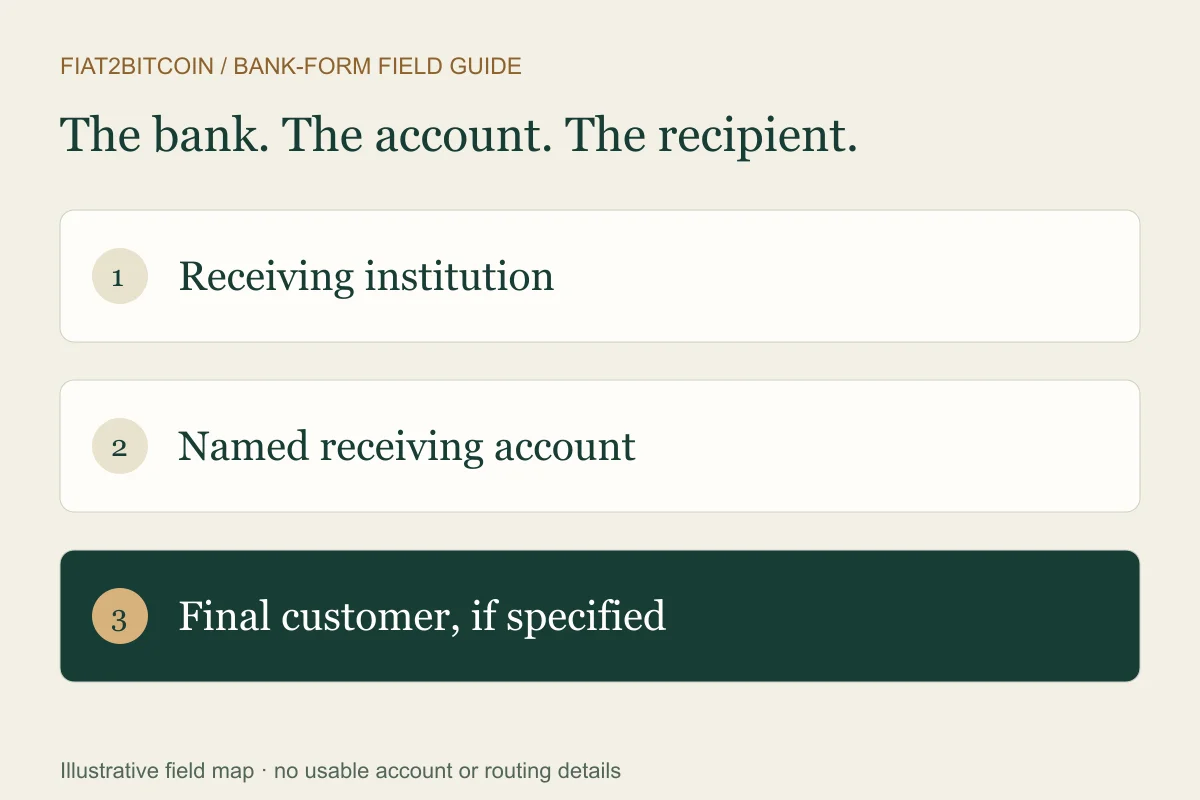
A transfer form asks for a beneficiary bank name, but your instructions also show a recipient, an intermediary and a final customer. Each label answers a different question. This guide explains the bank-transfer meaning with fictional examples; it does not provide bank details for sending money.
Which account does the beneficiary bank serve?
The bank’s name and routing identifier locate the institution; the beneficiary account number identifies the named receiving account. A final customer number or order reference can be an additional instruction. Check the complete mapping when a sheet lists more than one identifier.
What is a beneficiary bank?
It is the financial institution on the receiving side for the named beneficiary account. For a simple transfer to a person, it is usually the bank where that person holds the receiving account. The bank does not become the person being paid just because its name appears on the instruction sheet.
Wells Fargo’s wire guidance asks for the recipient’s name and address separately from the recipient bank’s name, account number and routing identifier. That separation is the practical starting point: first identify the recipient, then identify the bank serving the receiving account.
For an institution-level account used to allocate money onward, the named beneficiary can be an institution while the final customer appears in for-further-credit details. Read the complete arrangement instead of replacing the beneficiary with the final customer.
A fictional transfer with three separate roles
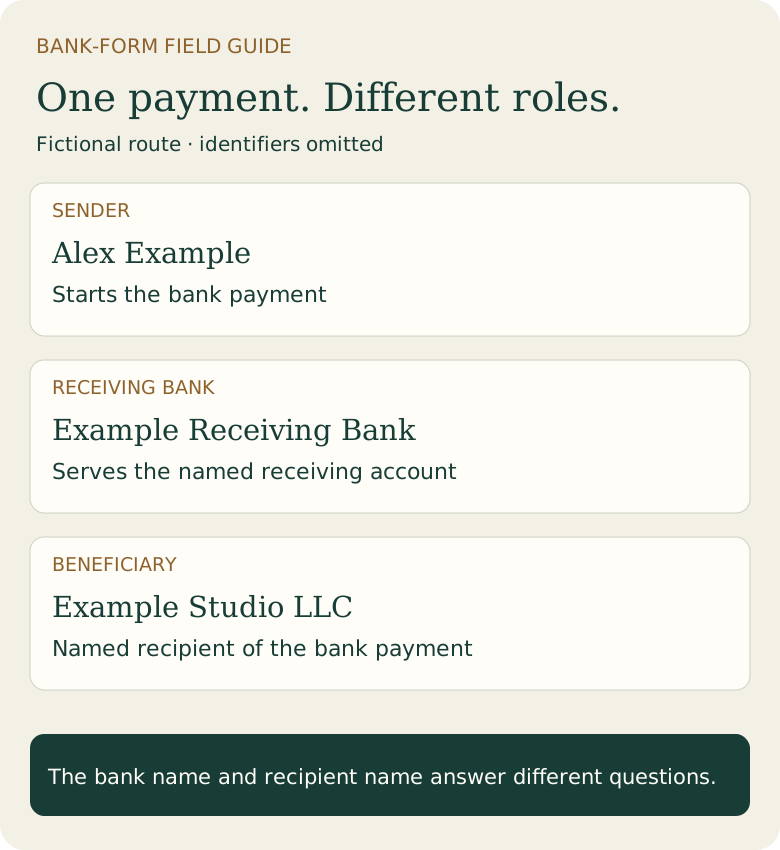
Alex Example is paying Example Studio LLC. The verified instruction sheet names Example Receiving Bank. Alex’s own bank sends the payment. These invented names describe roles; there are no usable account or routing numbers here.
Scroll across the table to see all columns.
| Field | Fictional entry | What it identifies |
|---|---|---|
| Remitter | Alex Example | The sender of the bank payment |
| Beneficiary | Example Studio LLC | The named recipient/account holder |
| Beneficiary bank | Example Receiving Bank | The bank serving that receiving account |
| Receiving account | ACCOUNT-OMITTED | The account identified by the recipient’s instructions |
| Payment reference | DEMO-INVOICE-17 | The recipient’s requested matching information |
What should you enter as the beneficiary bank name?
Use the bank name in the current receiving instructions. Check that it belongs with the same account, currency and routing details. Do not copy the name of your own bank, the merchant’s trading brand or a bank mentioned only as an intermediary.
An app may offer an institution lookup after you enter a routing code. If the returned name conflicts with the verified instructions, pause and ask the sending bank and instruction issuer to explain the discrepancy. A familiar logo or similar name does not resolve it.
A bank’s legal name can differ from the brand you recognize. Ask which exact name and identifier the sending bank requires. Keep the bank’s address separate from the recipient’s address.
Beneficiary bank versus intermediary or correspondent bank
The beneficiary bank serves the named receiving account. An intermediary helps route a payment between institutions. A correspondent relationship describes services banks provide to each other; one bank can act in more than one role.
A longer instruction sheet can therefore list two banks without offering a choice between them. Use the intermediary-bank guide to map the route and the correspondent comparison to understand the relationship. Do not remove a listed bank because the form has fewer boxes.
Ask the sending bank how its form carries all required routing information. Only that bank can confirm whether a particular online or assisted process supports your instruction sheet.
What if the bank name is missing or two names conflict?
Obtain the complete instructions from the intended recipient through a known channel. Confirm the payment method and currency, then ask the sending bank to explain which institution it needs in each bank field. Do not infer an account number or routing code from a bank-name search.
Scroll across the table to see all columns.
| What you see | Question to resolve |
|---|---|
| Only a recipient name | Which bank and account are designated to receive this payment? |
| Two banks | Which is the intermediary and which serves the beneficiary account? |
| A changed bank name or account | Can the original instruction issuer confirm the change through an established channel? |
| A bank-name lookup mismatch | Does the sending bank recognize these exact receiving details for this method and currency? |
What this means for a Bitcoin purchase
A bank payment and Bitcoin delivery are separate events. If an eligible provider checkout offers a bank-payment method, use that checkout’s current instructions and keep its order record. A correctly named bank does not prove an order was accepted, funded or delivered.
Fiat2Bitcoin does not receive customer wire funds or issue wire instructions. Check the current purchase options for the routes actually offered to you. The wire guide explains the surrounding terminology, while the beneficiary-name guide covers who is named to receive the payment.
Sources & further reading
These sources explain the payment systems and rules discussed in this guide. For your purchase, check the provider’s current offer and terms.
- Wells Fargo: Separate recipient and bank information
- Schwab Bank: Separate receiving bank, account registration and further-credit fields
- Federal Reserve: Creditor, Creditor Agent and Ultimate Creditor guidance
Published by Fiat2Bitcoin. Worked examples use fictional figures and records; they are not current prices or customer transactions. How we prepare our guides.