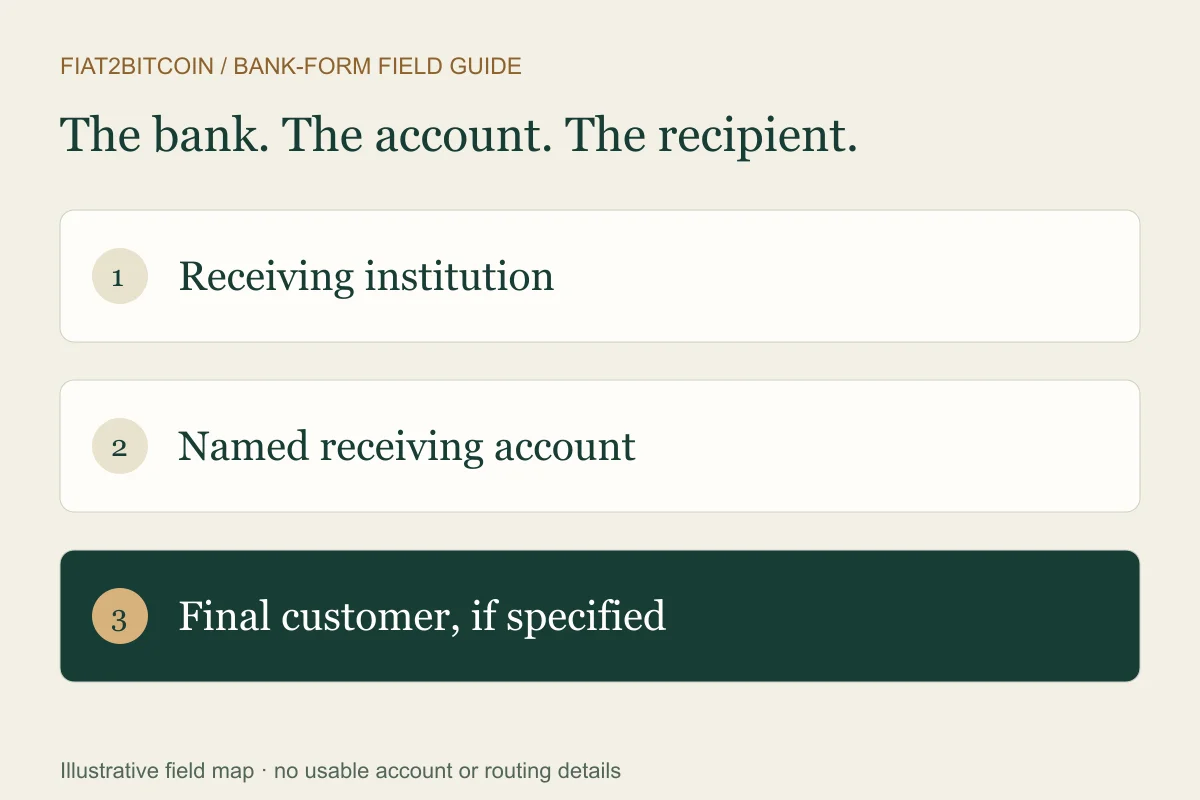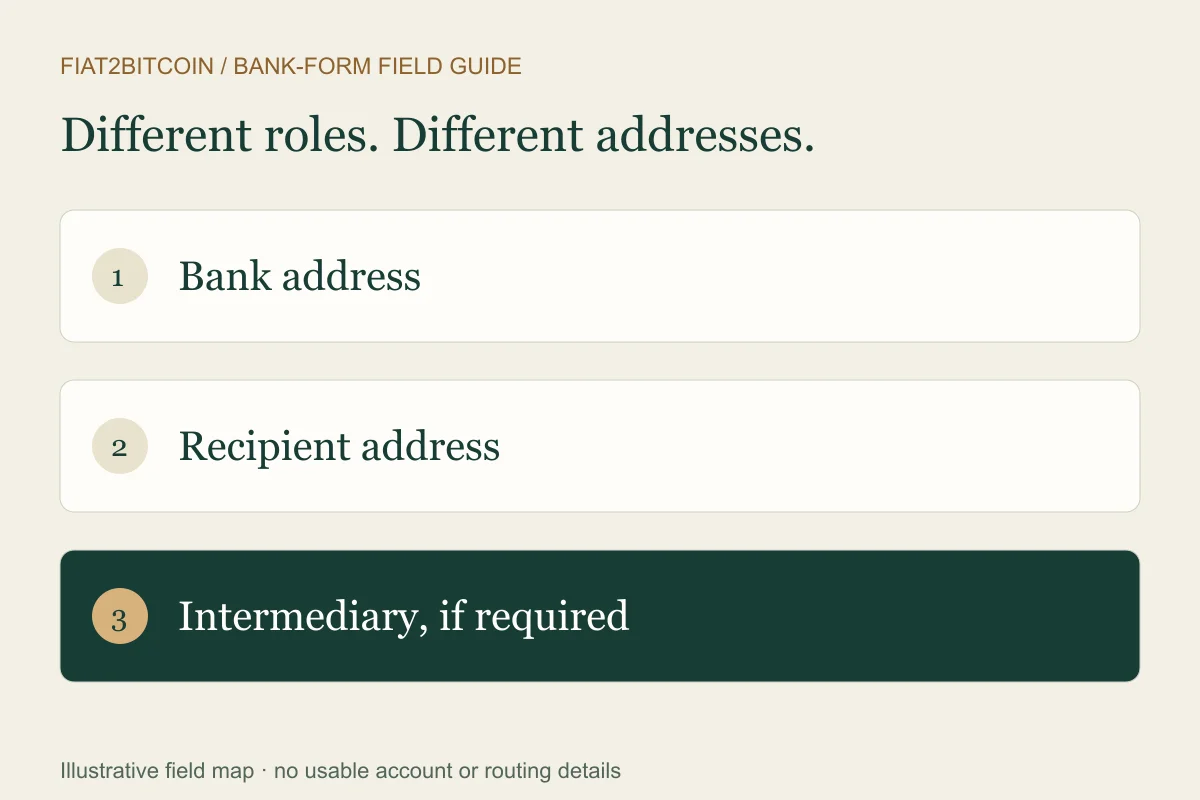
You have the correct account details, but a wire form asks for a bank address. Is that the branch near the recipient, the bank’s headquarters or the recipient’s home? The right answer comes from the verified receiving instructions and your sending bank’s requirements, not proximity.
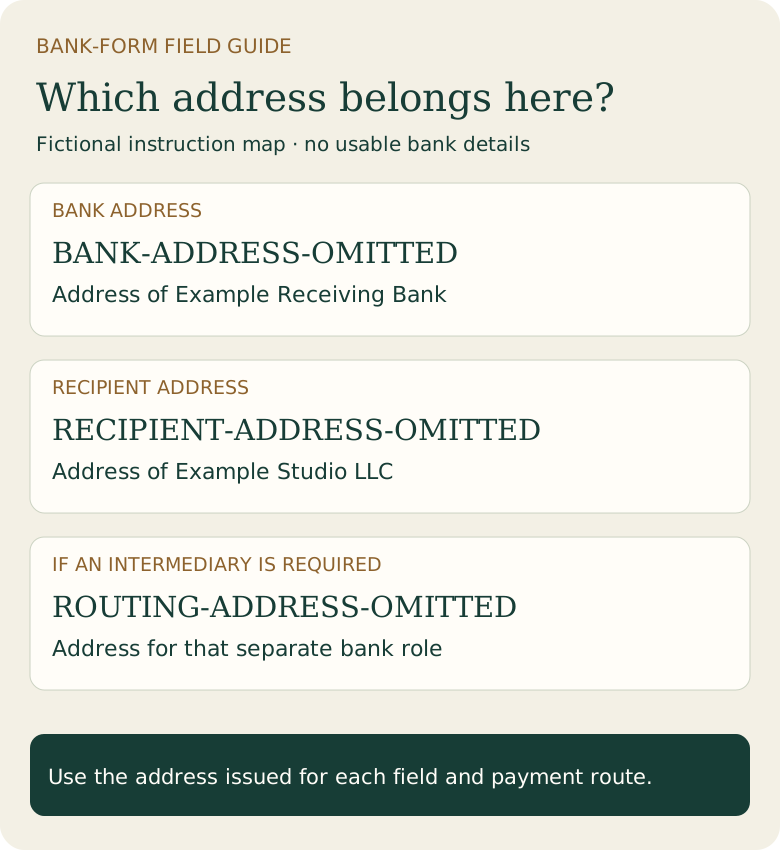
Is the bank address the same as a remittance address?
A remittance or remit-to address can identify a supplier’s designated payment address on an invoice or in a supplier record. A beneficiary-bank address identifies the financial institution for the specified payment route. Confirm which role the form requests, even when two addresses happen to match.
An electronic-payment system can retain a remit-to address alongside separate bank details. The invoice-address example shows how office, billing, payment and bank addresses answer different questions.
Does a branch name determine the bank address?
A bank branch name is an institution-defined designation, not necessarily the address required for a particular payment route. A bank can use central processing details or have no separate branch-name requirement. Keep the current receiving-bank instructions together instead of choosing the closest retail office from a locator.
Bank address versus beneficiary address
Read the words immediately beside the address box. “Beneficiary bank address” asks about the bank. “Beneficiary address” or “recipient address” asks about the named recipient. An intermediary-bank address, if required, belongs to another institution in the route.
Schwab Bank’s wire-request form provides separate places for a receiving-bank address and the account holder’s address, with final-beneficiary information where further credit applies. This illustrates why one address cannot safely fill every address box. Your own bank may use different labels.
For the names associated with those fields, use the beneficiary-bank explanation and the beneficiary-name guide.
An address example with no usable payment details
Imagine an instruction sheet from Example Studio LLC. It lists Example Receiving Bank at BANK-ADDRESS-OMITTED and Example Studio LLC at RECIPIENT-ADDRESS-OMITTED. It also names Example Routing Bank as an intermediary. The placeholders below cannot be used to send money.
Scroll across the table to see all columns.
| Form label | Use the verified address for | Do not substitute |
|---|---|---|
| Beneficiary bank address | Example Receiving Bank | Alex’s home or the studio’s office |
| Beneficiary / recipient address | Example Studio LLC | The bank’s headquarters |
| Intermediary bank address, if required | Example Routing Bank | The receiving bank’s address |
| Final beneficiary address, if required | The named final customer in the instructions | A guessed branch or an unrelated customer |
Where do you find the correct bank address?
Start with the recipient’s current incoming-payment instructions obtained through an established channel. They should identify the bank and any address needed for the specified payment route. If the document omits an address your sending form requires, ask the issuing institution or recipient to supply it and have the sending bank confirm the mapping.
A general branch locator answers where branches are, not which address belongs on your wire. A search result, old saved recipient or previous payment may describe a different bank entity, currency or processing arrangement. Do not combine fragments from different instruction sheets.
If the bank’s name differs from a trading brand or your app’s lookup result, resolve that difference before choosing an address. Keep the complete bank name, identifier and address together in the bank’s confirmation.
Can you use a branch or headquarters address?
Use it only when the verified instructions and sending bank identify it as the appropriate address for this transfer. There is no universal rule that the nearest branch or corporate headquarters always works.
The same institution may publish different instructions for different account types, currencies or transfer methods. A domestic wire, international wire and ACH transfer should not be assembled from each other’s details. The ABA-versus-SWIFT guide explains those identifiers without treating them as interchangeable.
Ask: “My instructions give this address for this bank and currency. Your form asks for a bank address. Is this the correct field, and will the complete required address be transmitted?” Do not invent a postcode or abbreviate a required name to get past a form error.
What if you already sent the wrong address?
Contact the sending bank promptly with the original transfer reference. Explain which field and value may be wrong, and ask what correction or investigation is available for the payment’s actual stage. Notify the intended recipient through its known channel and retain the case reference.
An address error does not by itself establish whether the bank sent, rejected, returned or credited the payment. Follow the actual bank and recipient records. Use the wire-tracking checklist to organize those facts; avoid a replacement transfer until the first payment’s status and any duplicate risk have been resolved.
A short address check before sending
Confirm four things together: the bank field’s role, the exact address issued for that role, the matching bank/account identifiers, and the payment method and currency. Investigate unexpected changes through a previously verified contact route.
For purchase funding, take instructions only from the actual provider’s eligible checkout. Fiat2Bitcoin does not issue bank instructions or receive customer wires. Visit the wire-learning hub for related field explanations and compare purchase methods for current options.
Sources & further reading
These sources explain the payment systems and rules discussed in this guide. For your purchase, check the provider’s current offer and terms.
- Schwab Bank: Receiving bank, account holder and final beneficiary address fields
- Wells Fargo: Recipient details and international-wire requirements
- FBI: Independently verify changes to payment instructions
Published by Fiat2Bitcoin. Worked examples use fictional figures and records; they are not current prices or customer transactions. How we prepare our guides.