A recipient gives you the bank name and account number, but your form also asks for a branch name. Searching for a nearby office can produce a plausible answer that belongs to a different location or payment route. Resolve the field using the recipient bank’s current instructions, especially when the account was opened online or the branch has changed.
Does the branch name give you the sort code or BSB?
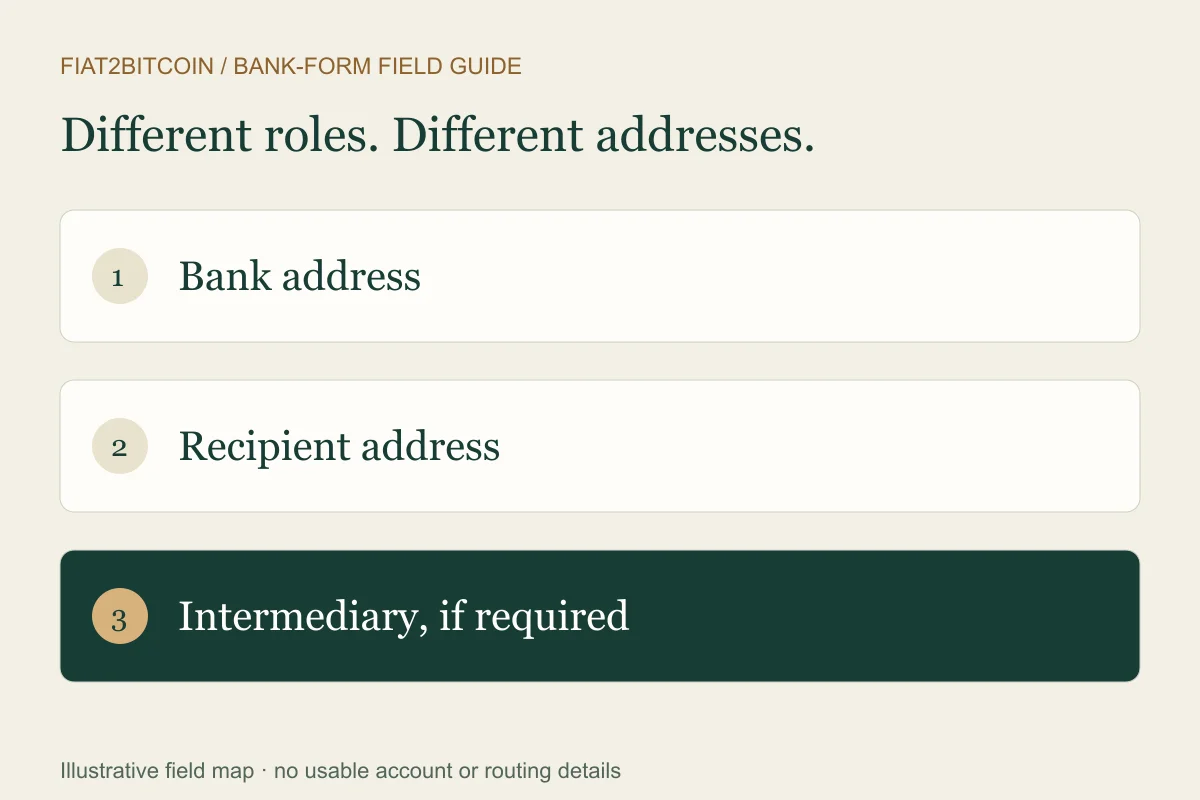
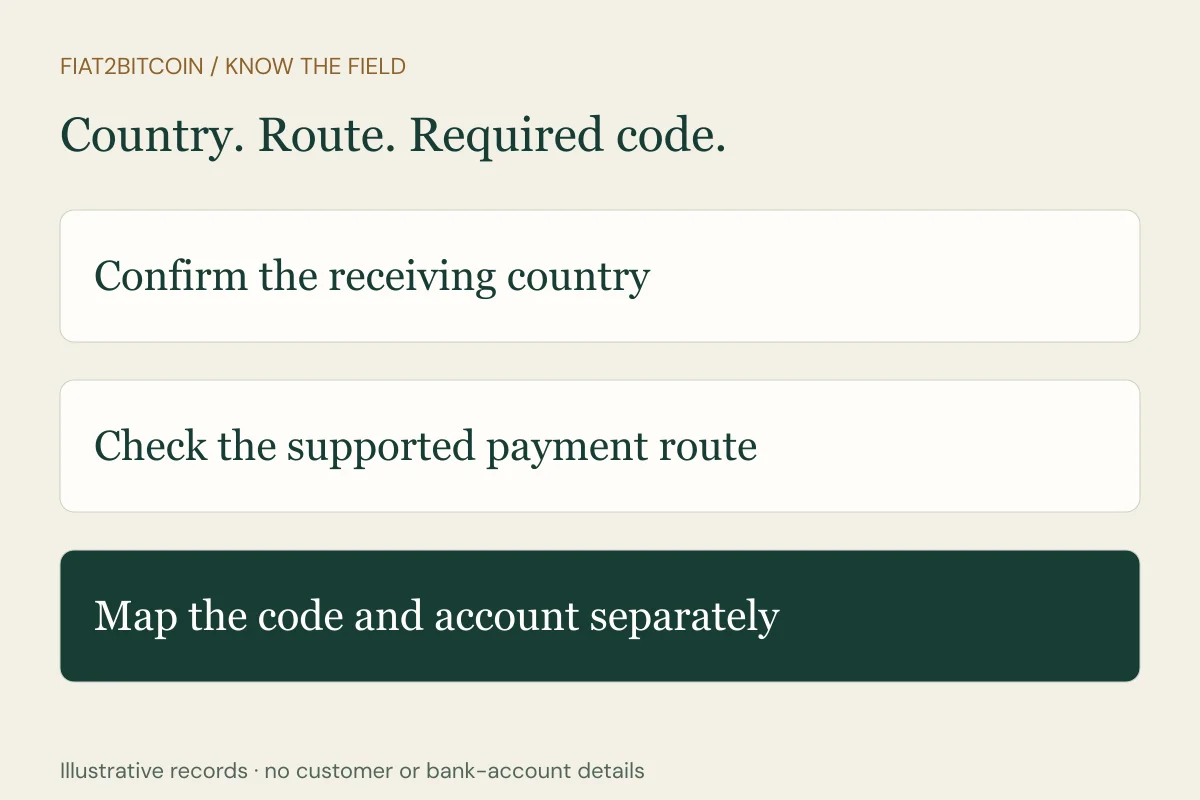
A descriptive branch name does not supply a verified numerical routing code. The UK sort-code example shows why the destination and supported form matter. The Australian BSB field map keeps the routing identifier and receiving account separate.
If an old statement and a new payment request show different branch details, ask the receiving institution which account-specific instructions are current. Do not select a code from a nearby branch just because its name or address looks familiar.
What is a bank branch name?
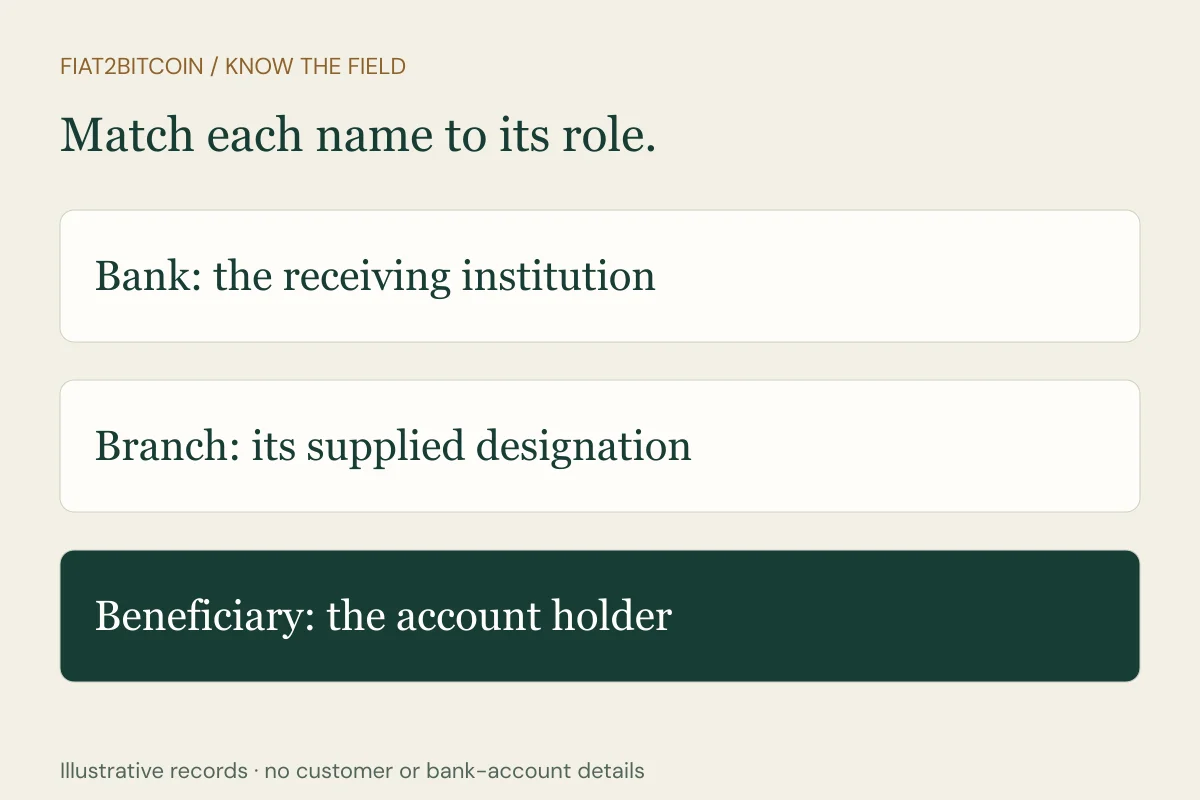
In ordinary banking use, it is the designation of a branch or office associated with the bank. A fictional example is “Example Bank — Riverside Office.” The institution’s name is Example Bank; Riverside Office is the invented branch designation. Neither label identifies the account holder or supplies a usable routing code.
Payment systems do not all use branch information in the same way. A bank may give a central processing designation, specify a bank-wide name for a legacy field, or tell customers that no branch name is required. The form’s label alone cannot establish which situation applies to the recipient.
For example, DBS Singapore’s bank-and-branch guidance says that indicating a branch name is no longer required and separately describes its bank and branch-code information. That published exception is a reason to check the institution’s own rule, not to assume that every payment worldwide can omit the field.
Bank name, branch name and beneficiary name: a fictional example
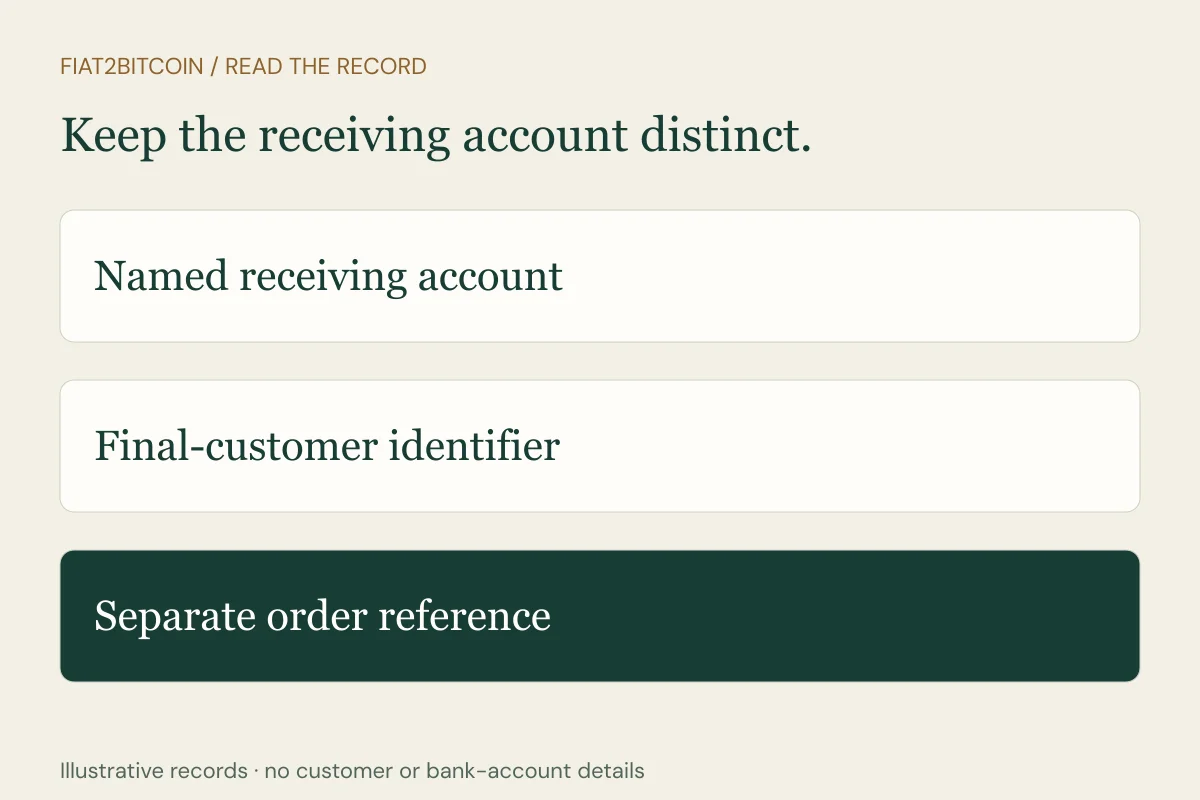
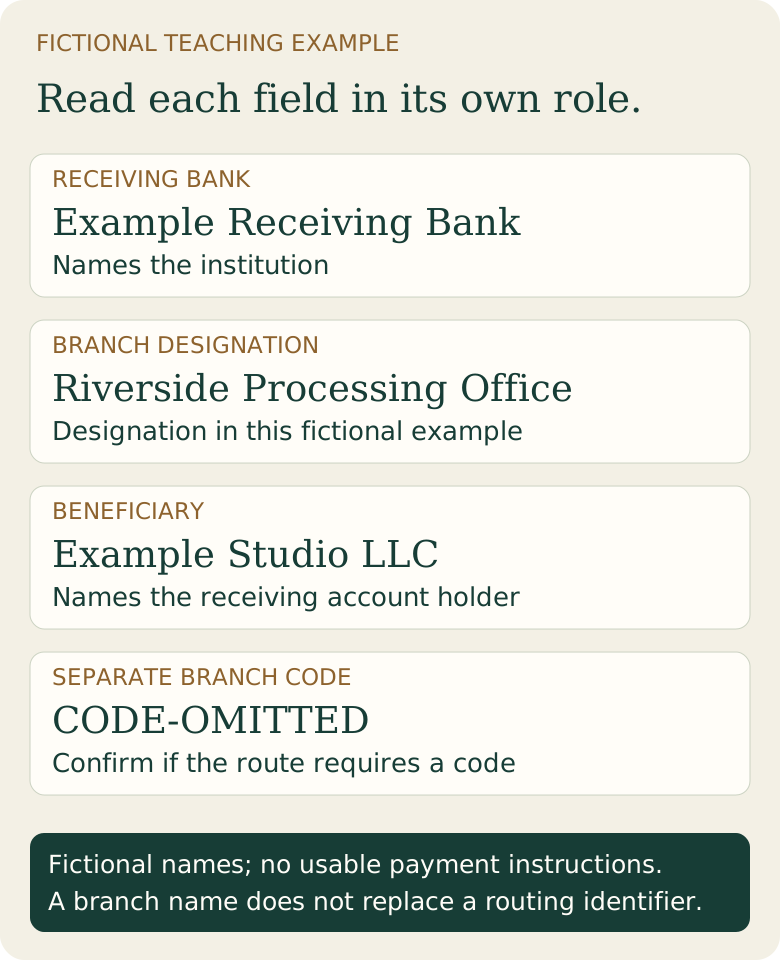
Alex Example needs to pay Example Studio LLC. The verified fictional instruction sheet names Example Receiving Bank and Riverside Processing Office. It separately lists the company as beneficiary. No real bank, address, account or code is supplied here.
Alex should ask the sending bank where the branch designation belongs and whether the receiving instructions require it for this route. Alex should not put Example Studio LLC into the branch-name field or substitute a street address for a branch code.
Scroll across the table to see all columns.
| Field | Fictional value | Role |
|---|---|---|
| Bank name | Example Receiving Bank | Receiving institution |
| Branch designation | Riverside Processing Office | Office designation supplied for this example |
| Beneficiary name | Example Studio LLC | Named holder of the receiving account |
| Required branch code | CODE-OMITTED | Separate identifier, if required |
Is a branch name the same as a branch code or SWIFT code?
A name is a readable designation; a branch code is a defined identifier in a particular banking scheme. Even if a directory displays them together, copying one into the other’s field can be wrong. Do not create a code by abbreviating a branch name or extracting arbitrary account digits.
Swift’s BIC guidance distinguishes an eight-character business-party identifier from an optional three-character branch element. That branch element can identify a location, department, service or unit. An eleven-character BIC therefore does not necessarily name the retail branch you visit.
The ABA-versus-SWIFT comparison explains the bank-code distinction. If a form asks instead for an NCC, see national clearing code. The sending bank should identify which scheme applies to the destination and payment method.
How do you find the correct branch name?
First read the current receiving instructions for the intended account, payment method and currency. Look for a branch designation alongside the bank’s legal name and required codes. Use the bank’s official app, account documentation or verified support channel to clarify a missing field.
Ask a precise question: “This form requires a beneficiary bank branch name. Which designation should be used with these verified account and routing details for this payment?” The recipient can obtain that answer from its bank. Give the sending bank the complete instructions so it can explain how its form carries them.
A public branch locator can identify offices, but proximity to the recipient does not prove an office is the right payment destination. Do not assemble a bank name, account identifier and address from unrelated pages. The beneficiary-bank-address guide explains why a bank’s payment address can differ from another address you recognize.
What if the account was opened online or the branch closed?
An online account may still have institution-defined branch or processing details. It may also use a route where a separate branch name is not required. Ask the bank which case applies. “Online” or “head office” is not a universal substitute for a mandatory field.
If an old statement names a closed or renamed office, obtain current payment details from the institution rather than changing the code yourself. A different display name does not by itself tell you whether the account number or routing instructions changed. Keep the date and source of the confirmed instructions with your payment record.
What if the form rejects the branch name?
Check which field is failing: a text name, a bank-code selector, an address or an account identifier. Read any supported-format explanation. Ask the sending bank whether you selected the correct destination and payment type before editing otherwise verified details to force acceptance.
A form accepting an entry does not prove the account belongs to the intended recipient. Confirm the beneficiary name, account number and any further-credit information as separate parts of the instructions.
For a purchase, use the provider named in the actual checkout. Fiat2Bitcoin does not issue receiving-bank instructions or process customer wires. Compare currently offered purchase methods and check availability for your location rather than inferring an available wire route from this educational example.
Sources & further reading
These sources explain the payment systems and rules discussed in this guide. For your purchase, check the provider’s current offer and terms.
- DBS Singapore: Institution-specific bank and branch-name requirements
- Swift: BIC and optional branch identifiers
Published by Fiat2Bitcoin. Worked examples use fictional figures and records; they are not current prices or customer transactions. How we prepare our guides.