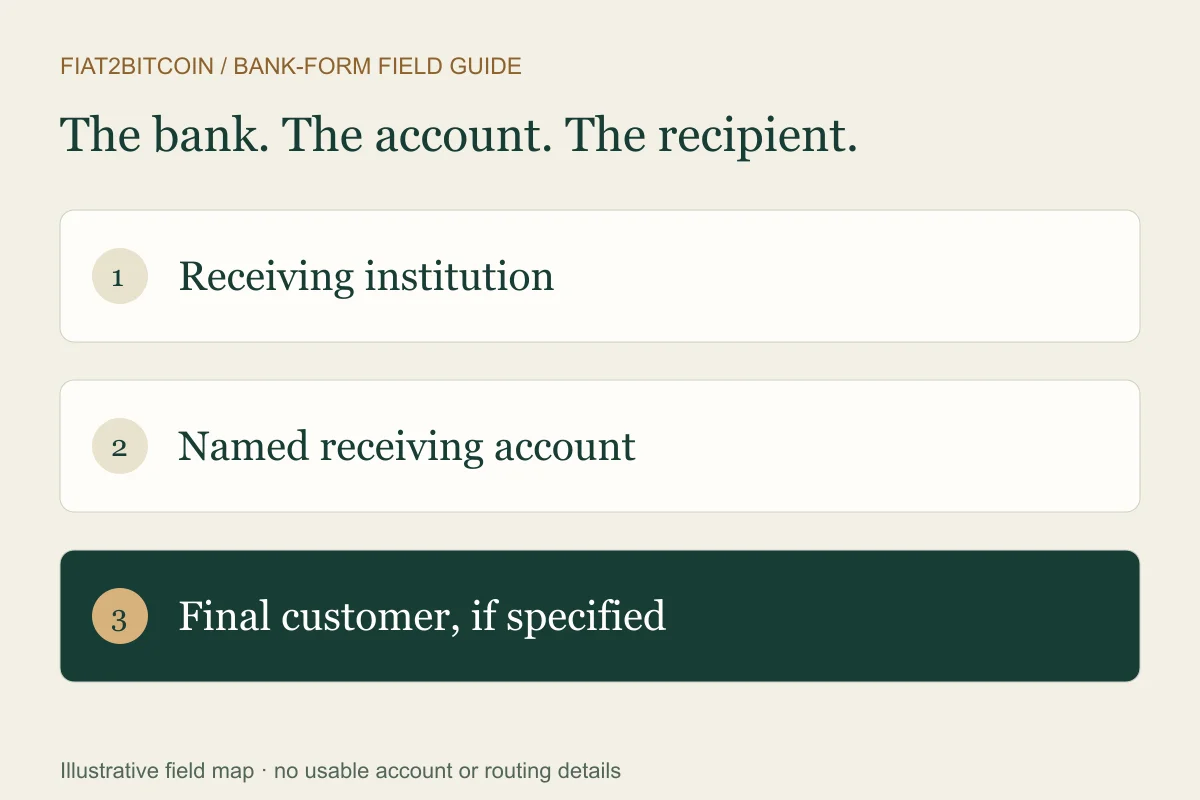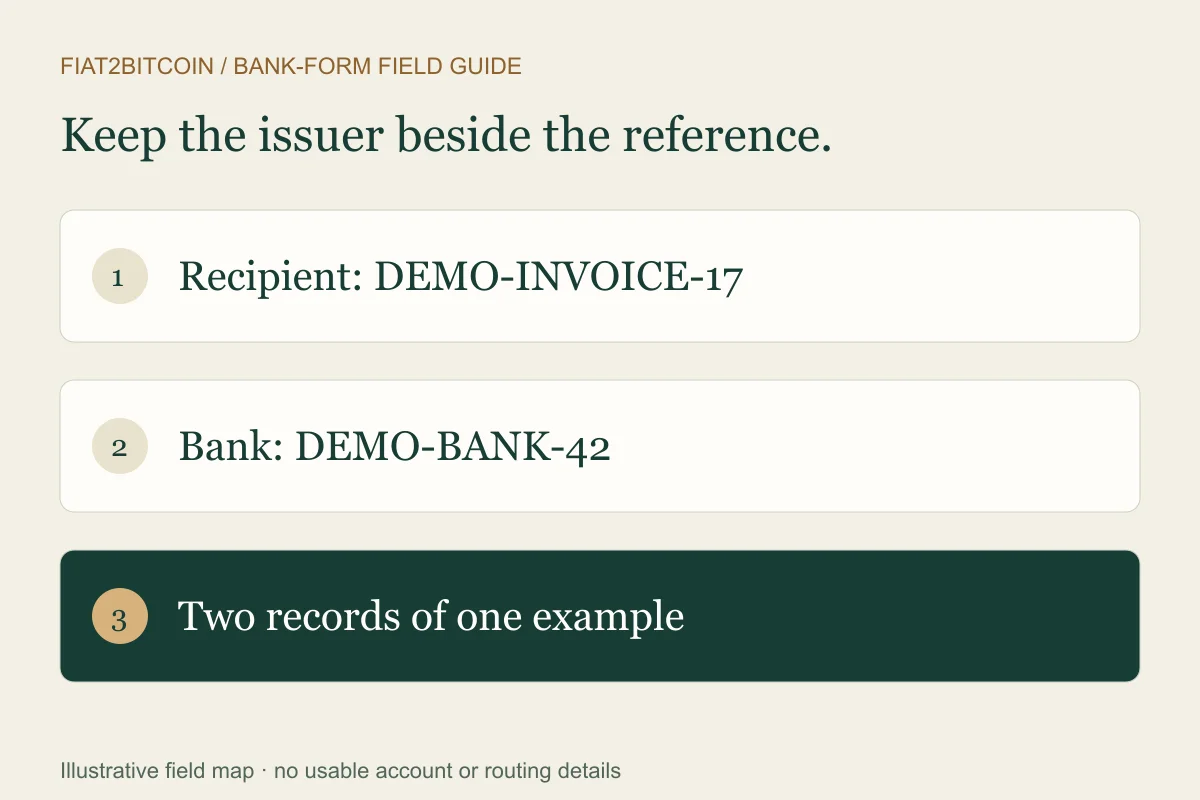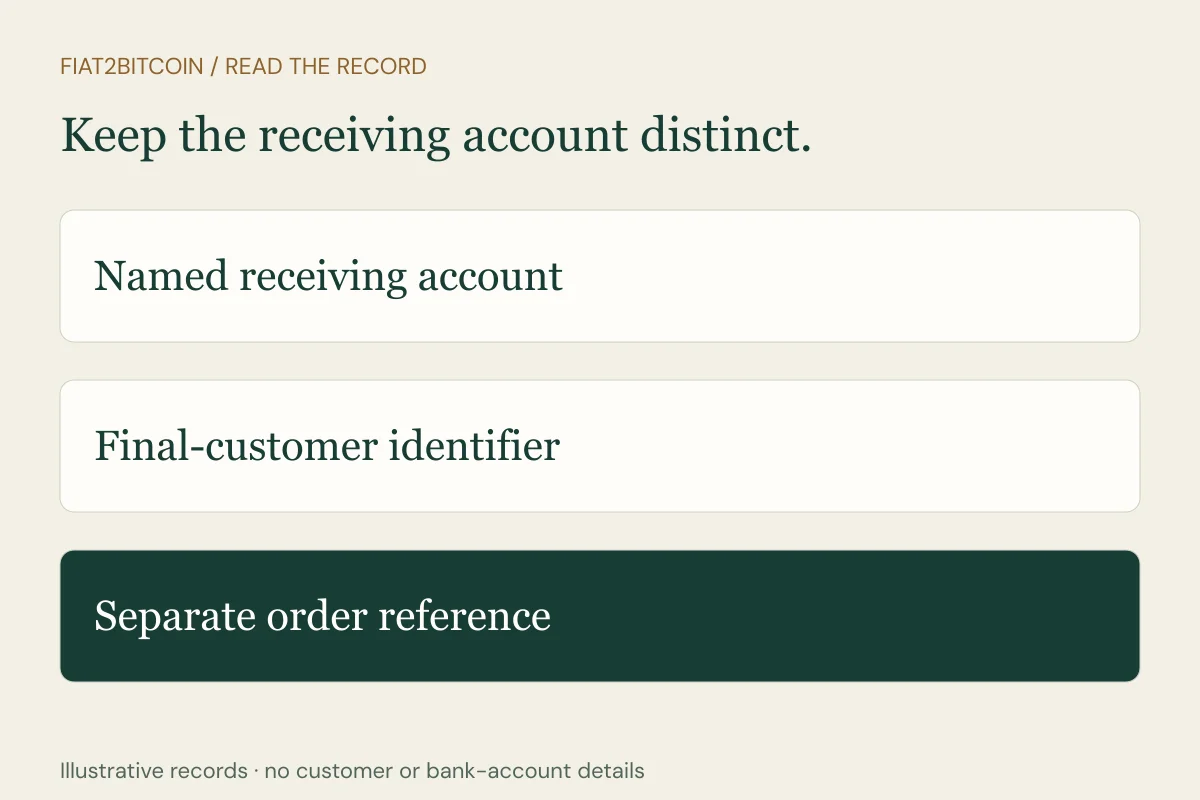
Your instruction sheet has a main receiving account, a final customer number and an order reference. Your bank form has one beneficiary account box. Start by identifying which number belongs to the named receiving account, then ask how the bank will carry any additional required details. No usable account numbers or bank instructions are supplied in this guide.
How do sort code and BSB relate to the beneficiary account?
In the relevant UK setup, the sort code is separate from the recipient account number. For Australia, the BSB example likewise keeps routing and account details in separate roles. Preserve the complete verified account value and follow the actual sending form’s instructions.
A routing-directory result cannot confirm that the supplied account belongs to the intended recipient. Confirm the account name, account identifier and any invoice or final-customer reference using the institution’s secure process. Do not substitute a sort code or BSB for the beneficiary account number.
What if the form asks for a suffix or national clearing code?
A separate recipient account suffix can refer to an account or subaccount identifier in a supported scheme. Confirm whether it is already included in the complete receiving account number before entering anything twice.
A national clearing code concerns bank or branch routing in the destination country. It does not replace the account number or an order reference. Have the sending bank identify which code scheme its field requires for this payment route.
What is a beneficiary account number?
On a payment form, it identifies the account designated to receive that bank payment. The beneficiary name identifies the named recipient or account holder, and the beneficiary bank identifies the institution serving the account. Read those details as one matched instruction set.
U.S. Bank’s international-wire requirements list the receiving bank’s SWIFT code, name and address separately from the recipient’s name, account number and address. This illustrates why a bank code cannot simply replace the recipient’s account identifier.
This page uses the bank-transfer meaning. An inherited IRA, an estate beneficiary or a designated-beneficiary account is a different subject. Those arrangements should not be inferred from the label on a wire-transfer form.
Example: main receiving account versus final-customer number
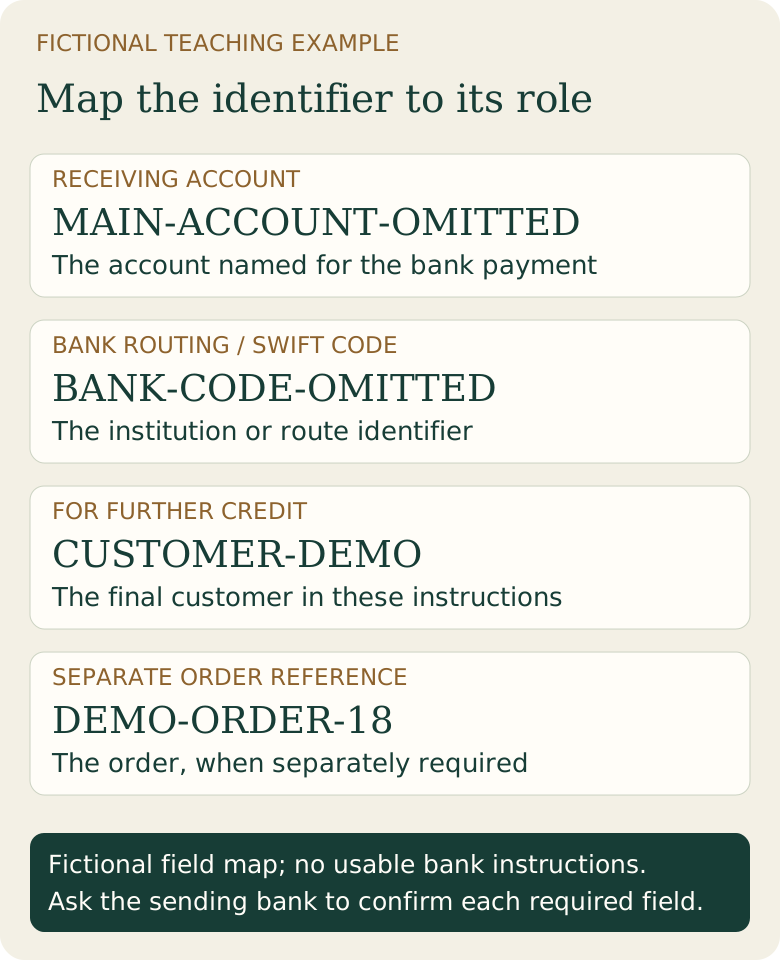
Alex Example is funding an invented account arrangement at Example Custodian. The sheet names Example Custodian as the receiving beneficiary, Example Receiving Bank as its bank, and Alex Example with a separate customer identifier for further credit. Every name and reference below is fictional; account and routing values are intentionally omitted.
Scroll across the table to see all columns.
| Instruction | Placeholder | Role in this example |
|---|---|---|
| Beneficiary name | Example Custodian | The named holder of the receiving account |
| Beneficiary account number | MAIN-ACCOUNT-OMITTED | The bank account receiving the payment |
| Bank routing / SWIFT identifier | BANK-CODE-OMITTED | The institution or route identifier |
| For further credit to | Alex Example / CUSTOMER-DEMO | The final customer allocation |
| Separate order reference | DEMO-ORDER-18 | The order reference, if separately required |
Is an IBAN the same as a beneficiary account number?
An IBAN is an international account identifier used for accounts and destinations that support that format. If the verified receiving instructions require it, have the sending bank identify its IBAN field and use the complete supplied value. Do not substitute a domestic routing code, a card number or a shortened customer reference.
Some forms label a field “account number / IBAN” because the required identifier depends on the destination. That label does not establish that every country uses IBAN or that you should create one from other details. Obtain the proper identifier from the receiving institution’s instructions.
Use the IBAN-versus-routing-number guide for the distinction between an account identifier and bank routing information. The ABA-versus-SWIFT guide explains the separate bank-code question.
What if the instructions have a second account or customer number?
Schwab Bank’s wire form separates the account number at the receiving bank from further-credit information when applicable. It is an example of a payment arrangement that needs more than a single account box; it is not a template for sending your own payment.
Keep the main receiving account attached to the named beneficiary, and keep the final customer’s identifier in the role specified by the verified instructions. The further-credit guide explains that onward allocation and the related Ultimate Creditor terminology.
If your bank’s online form has no supported field for required information, ask the bank what process can carry it completely. Do not assume a private memo reaches the recipient, overwrite the receiving account with the final customer’s number, or leave out a required reference to make the form submit.
How do you check the number before sending?
Use the current instructions for the intended payment, account type, currency and route. Compare the beneficiary name, account identifier, bank details and any required customer/order references. Ask the bank to confirm a missing character, conflicting label or unexpected bank-name lookup result.
If the instruction issuer changes the account, independently confirm that change through an established contact route. A correct-looking number, familiar business name or successful format check does not prove ownership or that the payment instructions are genuine.
The beneficiary-bank guide identifies the bank’s role, and the address guide separates bank and recipient addresses. Keep those facts together rather than assembling details from unrelated searches.
What if you already sent the wrong beneficiary account number?
Contact the sending bank promptly through its official channel with the original transfer reference. Explain the exact discrepancy and ask for the current payment stage and available investigation, correction or recovery process. Separately tell the intended recipient what happened using a verified channel.
Do not assume a correct recipient name will compensate for an incorrect account number, or that a submitted correction guarantees recovery. Keep the bank’s case reference, instructions and next-update time. Use the wire-tracking guide before considering a replacement transfer.
For a purchase, use the provider named in the actual checkout for payment records. Fiat2Bitcoin does not receive customer wires or issue bank instructions. Check current purchase methods for the routes actually offered to your location and account.
Sources & further reading
These sources explain the payment systems and rules discussed in this guide. For your purchase, check the provider’s current offer and terms.
- U.S. Bank: Separate bank information and beneficiary account details
- Schwab Bank: Receiving account and further-credit fields
- FBI: Verify changed banking instructions independently
Published by Fiat2Bitcoin. Worked examples use fictional figures and records; they are not current prices or customer transactions. How we prepare our guides.