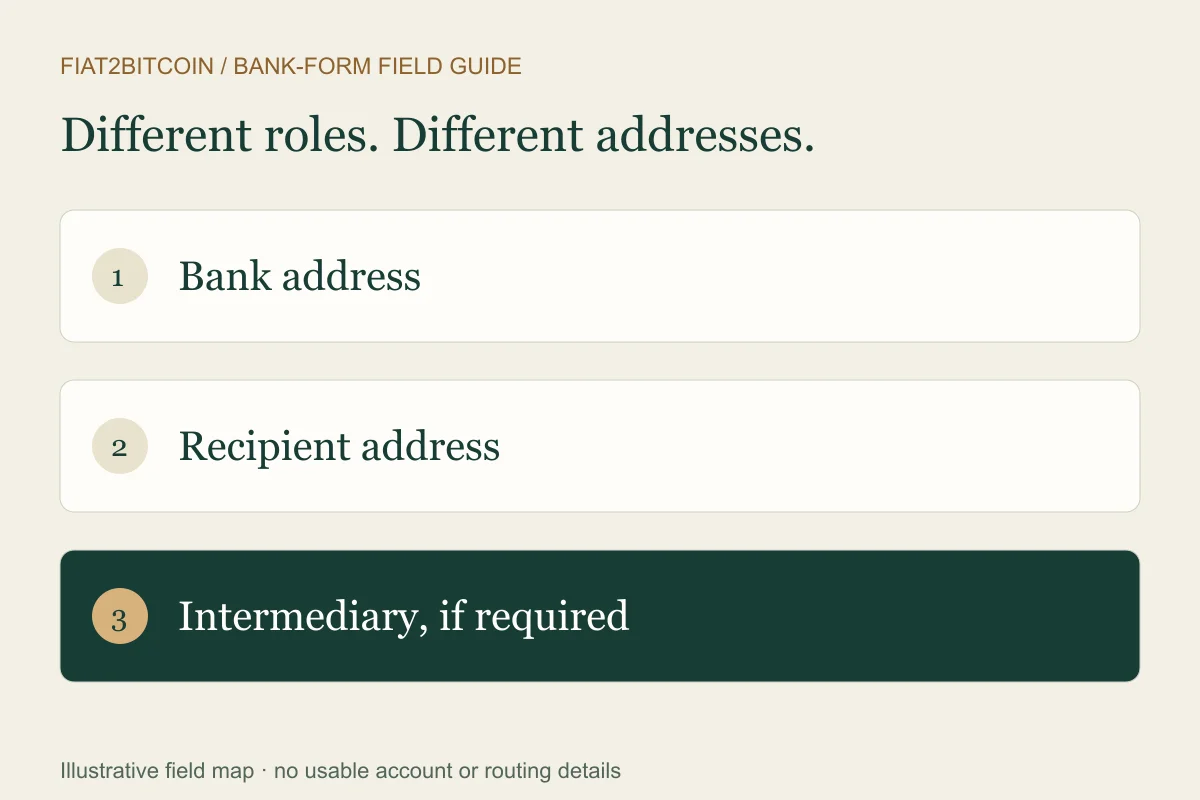
An invoice shows a head office, a “bill to” address and a separate “remit to” box. A payment form then asks for the beneficiary’s bank address. These labels refer to different roles. Start with who is being paid, how the payment will be made and which address the recipient has designated for that process.
What is a remittance address?
It is the address designated for remitting payment or maintaining the recipient’s payment record. The University of Washington’s invoice guidance gives a straightforward invoice example: its remit-to field identifies where payment should be sent. The exact use depends on the payer’s system and the selected payment method.
For a mailed payment, the supplier may specify a payments office or collection address that differs from its main business location. Use the current invoice and verified supplier instructions to resolve that difference. The word remittance describes a payment purpose; it does not by itself select a bank-transfer route.
If a form asks for the recipient’s legal name as well, obtain that name from the appropriate account or supplier record. The beneficiary-name guide explains the recipient field on a bank transfer, while the bank-address guide covers the institution’s separate address.
Remittance address versus billing, shipping and bank addresses
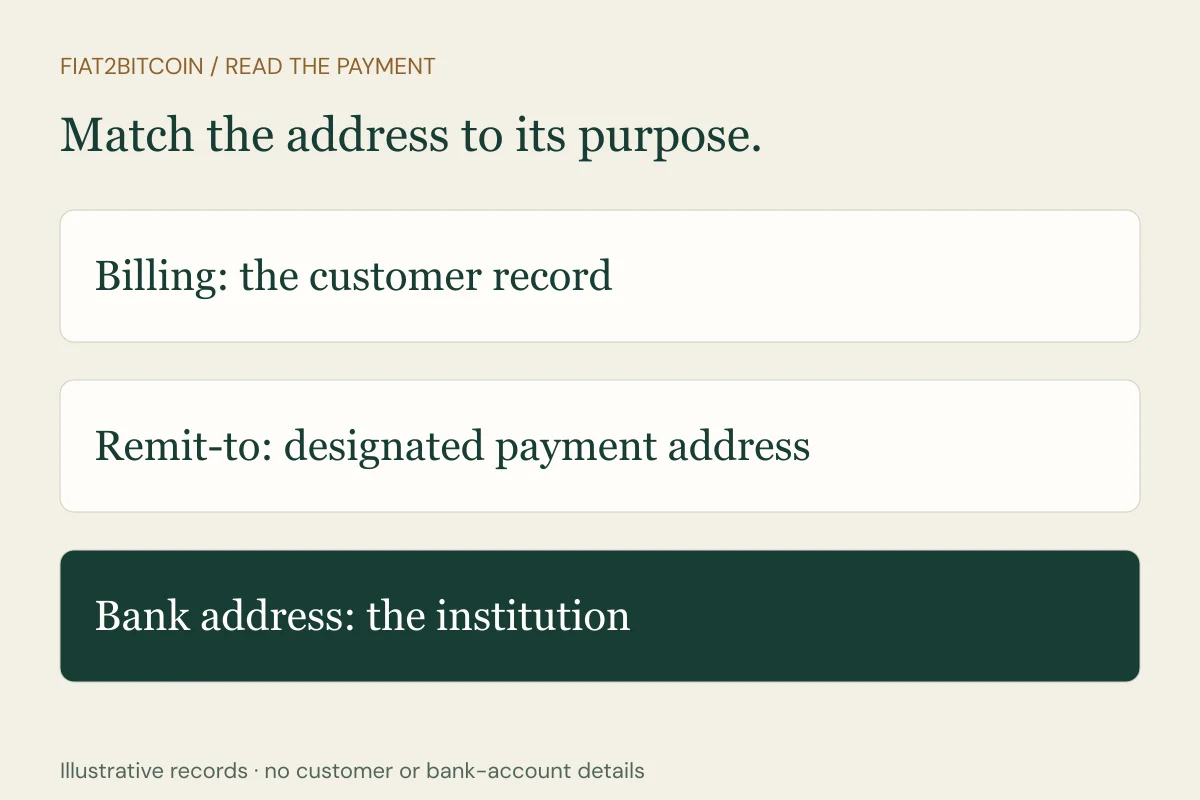
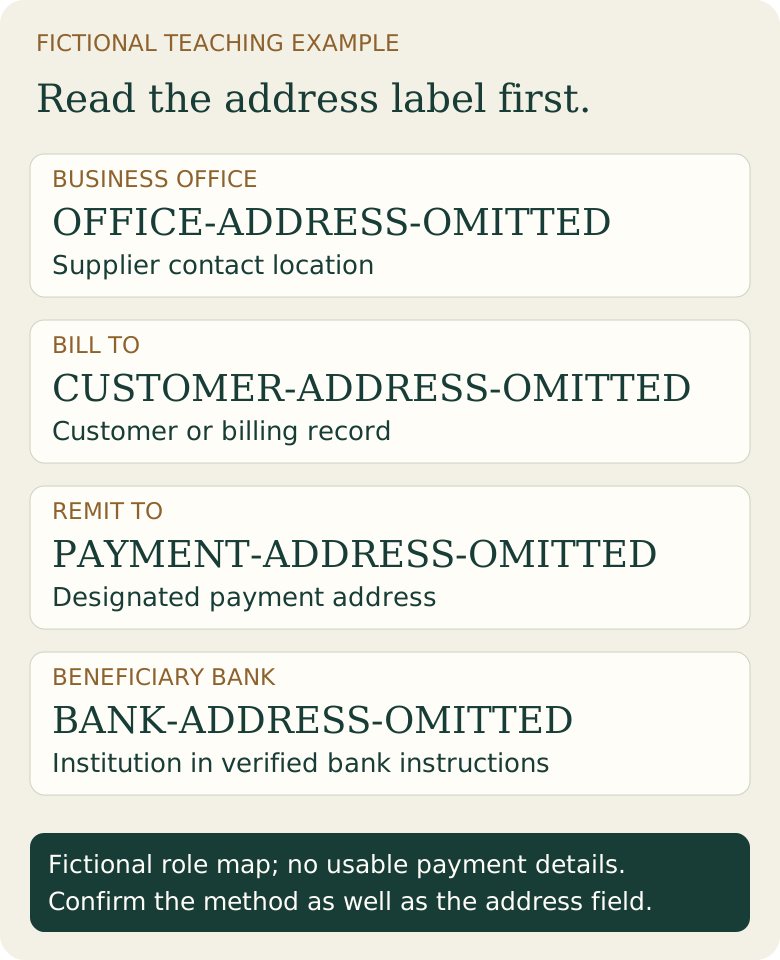
A billing address identifies the customer or billing record to which the invoice relates. A shipping address identifies where goods are delivered. A remit-to address identifies the recipient’s designated payment address. A bank address identifies the financial institution in the required banking instructions.
One business can use the same address for several roles, or different addresses for each. Treat any match as a fact to confirm from the instructions, rather than a reason to copy an address across every field. A form’s address label is more useful than the order in which addresses appear on a PDF.
Scroll across the table to see all columns.
| Label | Fictional record | Role to confirm |
|---|---|---|
| Supplier office | OFFICE-ADDRESS-OMITTED | Business contact location |
| Bill to | CUSTOMER-ADDRESS-OMITTED | Customer or billing record |
| Remit to | PAYMENT-ADDRESS-OMITTED | Designated payment address |
| Beneficiary bank address | BANK-ADDRESS-OMITTED | Financial institution in verified bank instructions |
Why is there a remit-to address when I am paying electronically?
An accounts-payable system can require address information even when funds move electronically. MIT’s supplier instructions explicitly require creating a payment mailing address in its supplier portal even for electronic payments. That describes its system’s record requirements; it does not tell you to mail a second payment.
Ohio University’s supplier form guidance also distinguishes a purchase-order address from a remit-to address, and explains why it retains the latter alongside direct-deposit information. These institutional examples show why the address field and payment-method field need to be read separately.
Use the approved electronic-payment process and the bank details supplied for that method. A postal address cannot replace an account identifier or routing information. If the online form offers only a bank-address field, ask the payer’s support team whether it needs the supplier address, recipient address or bank address before entering a different role.
Where do you find or confirm the right remittance address?
Look for “remit to,” “send payment to,” or a payment-details section on the current invoice. Compare it with the supplier profile in your approved payment system. Ask the supplier’s established accounts-receivable contact to confirm the intended payment method and the address used for it.
For a new supplier, follow the payer’s onboarding process so the recipient name, payment method, address and electronic details are verified together. For an existing supplier, ask whether new details replace the earlier record or apply only to a particular invoice, branch or payment route.
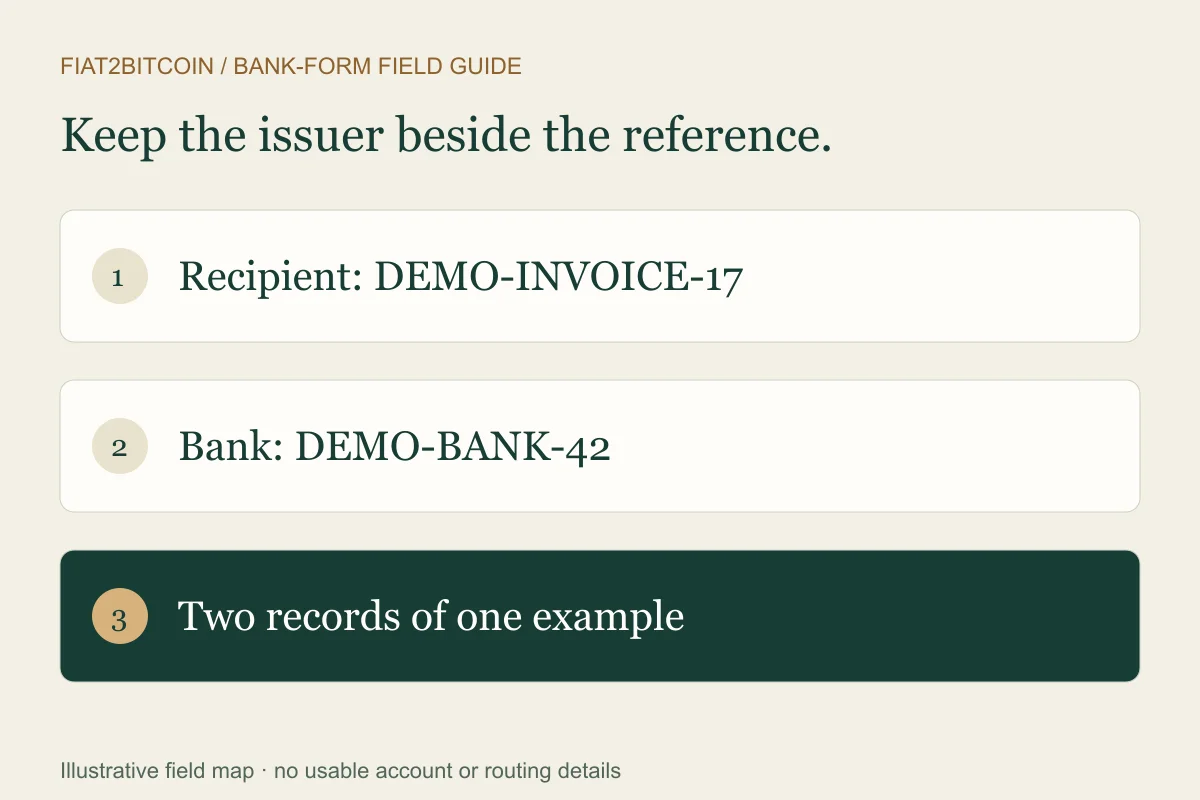
A useful question is: “For invoice DEMO-INVOICE-31, are we using the approved electronic payment method or a mailed payment? Which address belongs in this field, and which invoice reference should accompany the payment?” This is a fictional support prompt; use your own verified invoice details.
What if the remittance address has changed?
Pause the payment long enough to verify the change through an established contact route, such as a previously verified supplier number or approved portal. Keep the invoice and the change request available for the responsible payments team. Clarify whether bank-account details, recipient identity or payment method also changed.
The FBI’s business-email-compromise guidance recommends independently checking payment and account-information changes. A familiar email thread can still contain a fraudulent instruction. Use the supplier’s known contact record rather than relying only on a new phone number in the change request.
If you already sent payment, contact the bank or responsible payment team promptly with the original reference. Ask about its current stage and the available investigation process. Keep the original instructions and case number; confirm the existing payment before considering a replacement.
Is a remittance address the same as remittance advice?
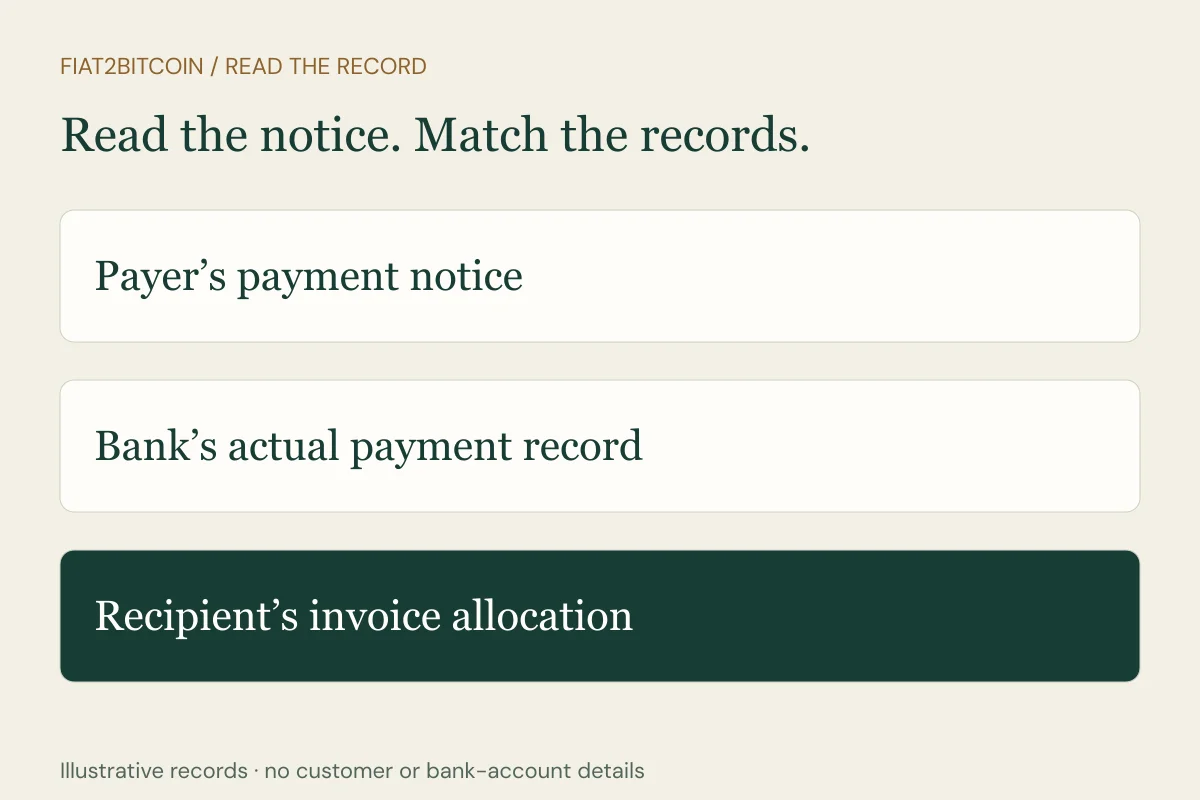
The address is a destination or supplier-record field. A remittance advice explains the payment and its intended allocation to invoices or other records. The advice may include contact or address information, but the document and the address serve different purposes.
Keep the invoice number or payment reference attached to the payment so the recipient can match it. For bank instructions that require further credit, obtain those allocation details separately; a payment mailing address is not a substitute for the required customer identifier.
For a Bitcoin purchase, use the provider and method shown in the actual checkout. Fiat2Bitcoin does not receive purchase funds or issue bank instructions. Review current purchase options for the routes offered to your location and account.
Sources & further reading
These sources explain the payment systems and rules discussed in this guide. For your purchase, check the provider’s current offer and terms.
- University of Washington: Remit-to field on an invoice
- MIT: Remit-to address required alongside electronic payments
- Ohio University: Purchase-order and remit-to address roles
- FBI: Independently verify changed payment information
Published by Fiat2Bitcoin. Worked examples use fictional figures and records; they are not current prices or customer transactions. How we prepare our guides.