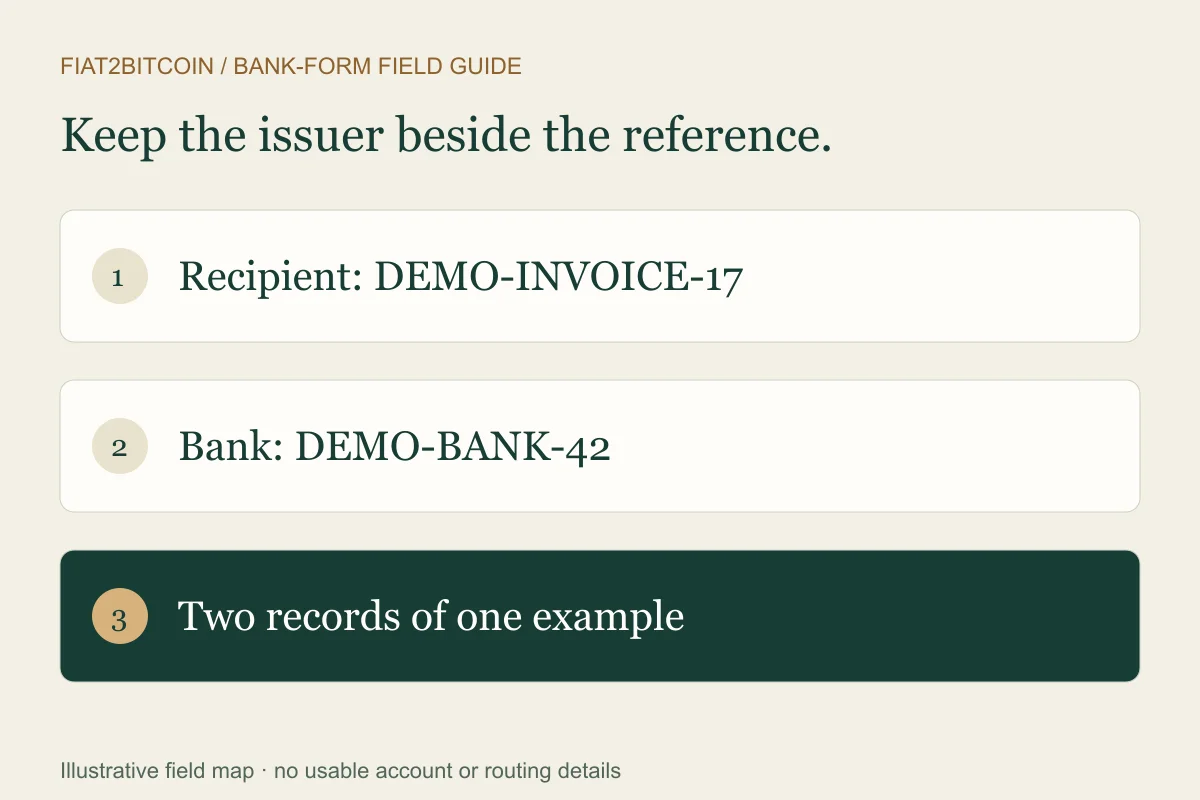
An email says “remittance advice attached,” but the payment is not obvious in your account. Start by identifying who issued the notice and what stage it reports. This guide covers ordinary business and bank-payment records, rather than medical-billing remittance codes or benefit-entitlement decisions.
How do remittance address and inward remittance differ from advice?
A remittance address identifies a payment-related address, commonly for a supplier invoice or supplier record. Inward remittance describes the receiving side of a payment under the bank’s terminology. Remittance advice is the document that describes a payment event or intended invoice allocation.
Keep the issuer, payment method, account event and invoice reference together. An incoming-bank advice can report a credited amount after charges, while a payer’s allocation notice can describe a different amount or event.
How does a bank debit advice fit beside remittance advice?
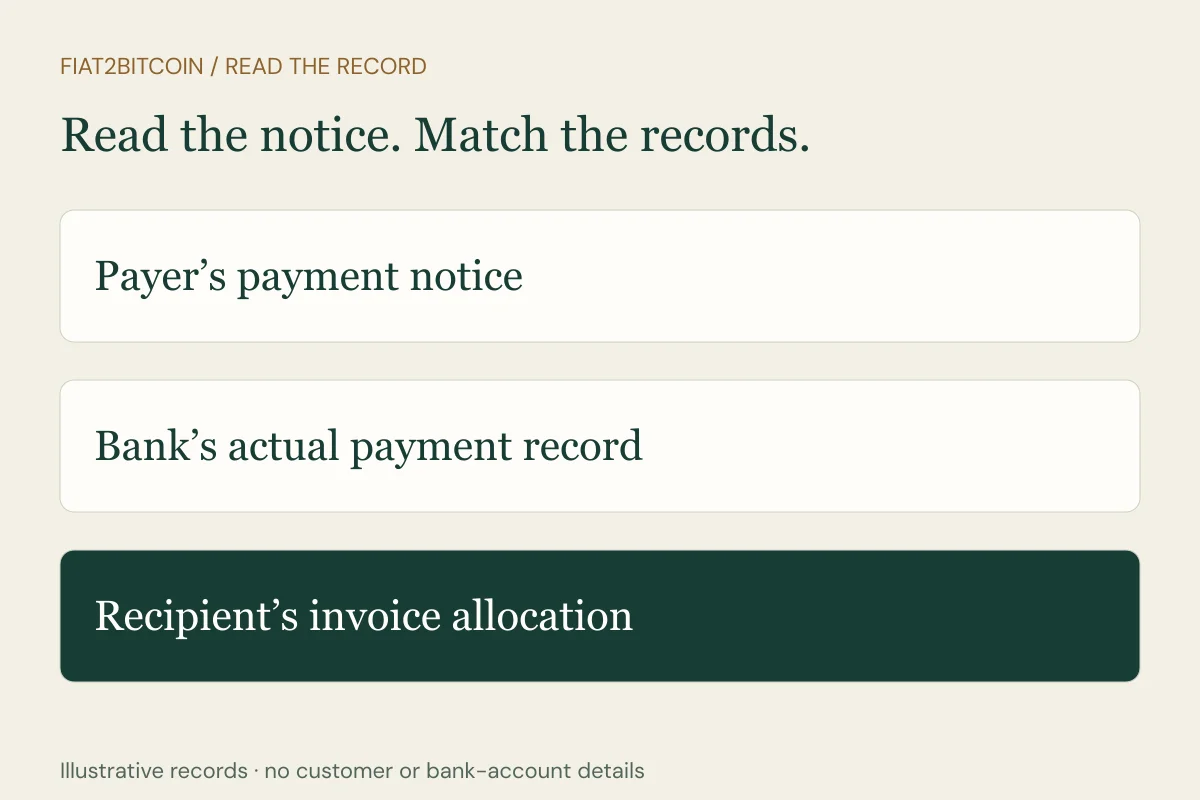
A debit advice explains an account debit or payment-processing event under the issuing bank’s definitions. A payer’s remittance advice explains the allocation it intends for invoices or other records. Match the bank event, payment amount, any fee and the recipient’s allocation record before treating the documents as the same evidence.
The wire-receipt example separates a fictional USD 480 payment from a USD 12 sender fee and the recipient’s later matching question.
What is remittance advice?
It is payment information that helps the recipient allocate a payment to the correct invoices or other obligations. A notice may list the payer, recipient, currency, payment reference, invoice numbers, adjustments and the amount assigned to each item. An advice number identifies the notice; it does not automatically identify the bank transfer.
Intuit’s QuickBooks Bill Pay guidance gives a practical software example: its advice PDF lists payment and bill details and accompanies the payment-processing email. The same guidance distinguishes a scheduling email from the later processing email. That describes QuickBooks’ workflow, not every accounting system.
The useful question is therefore not just “Does this document say paid?” Ask which record produced it and which payment event the issuer is actually reporting. Keep its reference alongside the separate bank-payment reference.
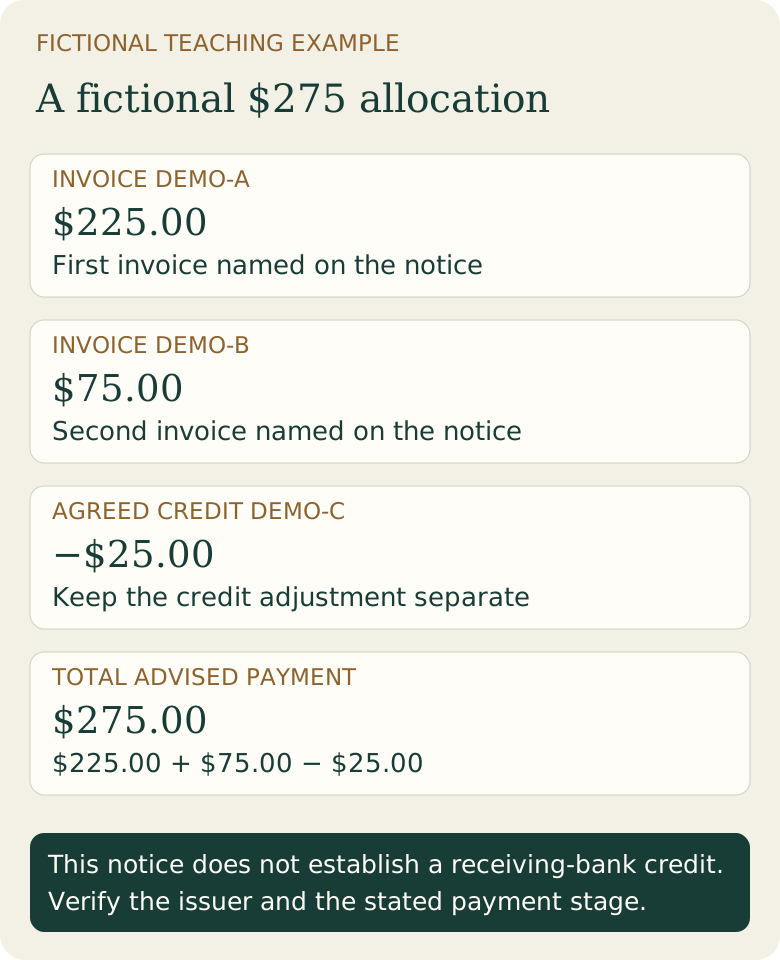
A fictional remittance advice with two invoices and a credit
Alex Example sends Example Studio LLC a fictional notice stating a $275.00 payment. The notice allocates $225.00 to DEMO-A, $75.00 to DEMO-B, and subtracts an agreed $25.00 credit DEMO-C. These invented records illustrate reconciliation; no real payment or customer outcome is being reported.
Scroll across the table to see all columns.
| Item on the advice | Amount allocated | Question to resolve |
|---|---|---|
| Invoice DEMO-A | $225.00 | Does this identify the correct invoice and open amount? |
| Invoice DEMO-B | $75.00 | Is this the intended invoice, rather than a duplicate? |
| Credit DEMO-C | −$25.00 | Has the recipient agreed and recorded this credit? |
| Total advised payment | $275.00 | $225.00 + $75.00 − $25.00 = $275.00 |
| Receiving-bank credit | Not established by this example | What does the bank’s own payment record show? |
Is remittance advice the same as a receipt or proof of payment?
An invoice requests payment. A payer’s remittance advice explains the payment it says it is making and the intended allocation. A recipient’s receipt acknowledges what that recipient records as received or paid. A bank confirmation or credit advice reports the particular event described by the bank. Read the actual status and issuer instead of treating these labels as interchangeable.
For contrast, Hang Seng’s inward-remittance FAQ describes an inward advice available to its business customers when funds have been credited. A recipient-bank advice of that kind is different evidence from a notice generated in the payer’s accounting system. Its meaning still depends on the bank’s stated process and the actual account entry.
If someone asks for proof of payment, ask which bank-issued document and fields they need. A forwarded screenshot or familiar logo does not independently establish authenticity, finality, available funds or settlement of every invoice listed.
How to read an advice without losing the matching details
Compare the issuer and recipient, payment currency, advised total, invoice identifiers, credits and any stated processing or delivery date. Keep bank fees, discounts and credit notes separate; do not silently alter the invoiced total to force a match. Ask the parties to explain an unexplained deduction or a currency conversion.
Record the issuer beside each code: advice number, recipient payment reference, bank transaction identifier and support case number. A single payment can cover several invoices, and one invoice can have several payments. Preserve that relationship when matching the records.
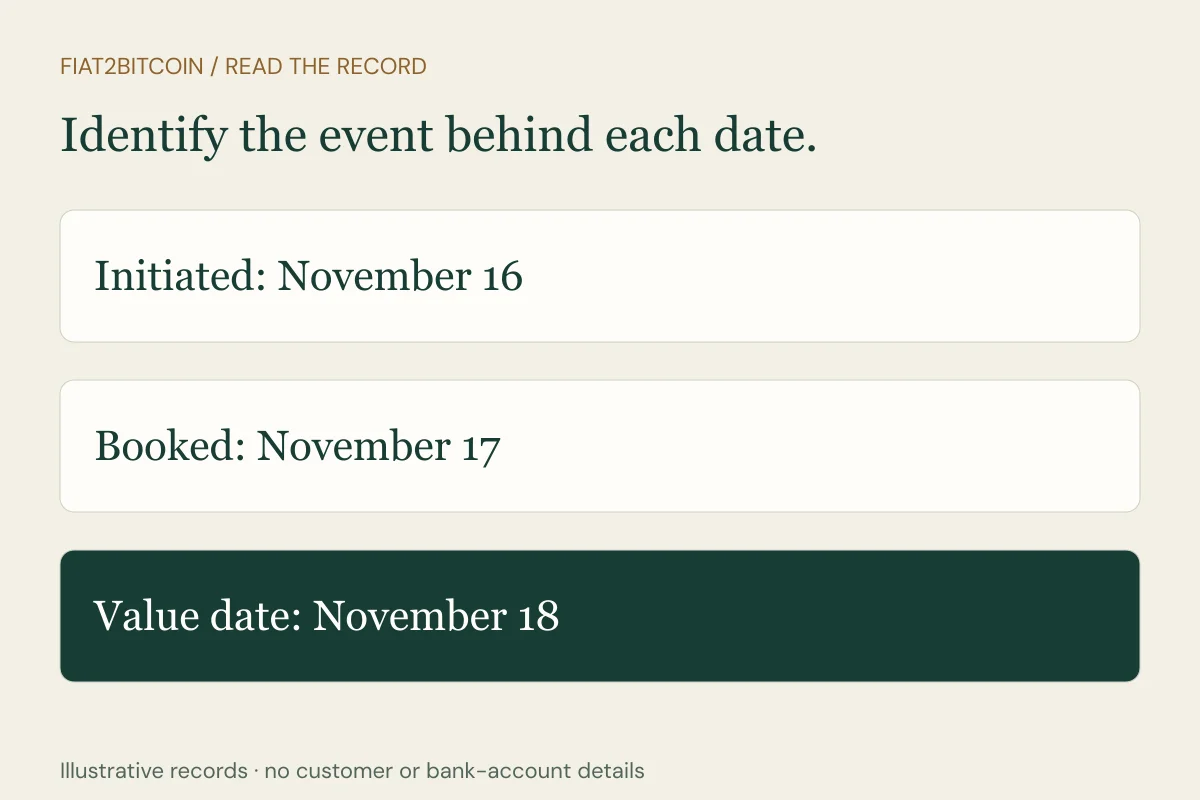
A date on the advice may be a schedule or processing date. A bank value date, booking date and actual available balance answer different questions. Ask which date applies before treating a notice as overdue or sending another payment.
What if the notice arrived but the money did not?
Check the account and currency the recipient expected, then ask the issuer to confirm whether the payment was only scheduled, started processing, sent by its bank, returned or matched by the recipient. Use the original reference to investigate the existing payment.
For a bank wire, the tracking guide explains how the sending bank’s trace information differs from an invoice reference. Ask for a case owner and next-update time. Resolve the first payment’s status before authorizing a replacement that could create a duplicate.
Use a known banking or business contact route for supporting documents. If the notice requests changed bank details, login credentials or an unexpected fee to release money, independently verify the request. Do not open a banking session from an unverified email link.
Keep the purchase and delivery record separate
For a Bitcoin purchase, a payment notice, the provider’s order record and the Bitcoin delivery record describe different stages. A notice about bank funds does not by itself establish which asset was bought, whether review finished or whether Bitcoin reached the intended wallet.
Use the provider named in the actual checkout for its payment and refund records. Fiat2Bitcoin does not receive customer wires or issue bank instructions. The wire-learning hub explains related records, and current purchase options show the methods available through the enabled connections.
Sources & further reading
These sources explain the payment systems and rules discussed in this guide. For your purchase, check the provider’s current offer and terms.
- Intuit: Remittance advice content and scheduling versus processing emails
- Hang Seng: Its bank-issued inward remittance advice and account credit
- FBI: Verify changed payment instructions and suspicious requests
Published by Fiat2Bitcoin. Worked examples use fictional figures and records; they are not current prices or customer transactions. How we prepare our guides.