A digital object can be useful without a physical form. The important questions are what you can do with it, how its rules are enforced and whether other people want to hold or accept it.
For Bitcoin, a limited supply is part of the explanation. Demand is the other part. Understanding both is more useful than assuming that scarcity, a past price increase or mining costs guarantee a future return.
Watch: what gives Bitcoin value
A 67-second educational walkthrough. See how scarcity and useful properties relate to demand, with a fictional 0.001 BTC example that separates coin quantity from price. Narration is synthetic.
Read the video transcript
Why does Bitcoin have value?
Bitcoin has a market value because people are willing to exchange money, goods or services for it. Its technical properties can support demand, but there is no guaranteed minimum price or future return.
Scarcity is one part
Bitcoin’s current rules limit issuance toward twenty one million coins. That constrains supply under those rules. It does not require buyers to pay more. A scarce asset can lose value when demand falls.
What users may find useful
People may value transferable units, independently checkable rules and control through signing keys. Actual use still involves fees, confirmation time, wallet security and willing counterparties. Speculation can also drive demand and volatility.
Same BTC, different dollar value
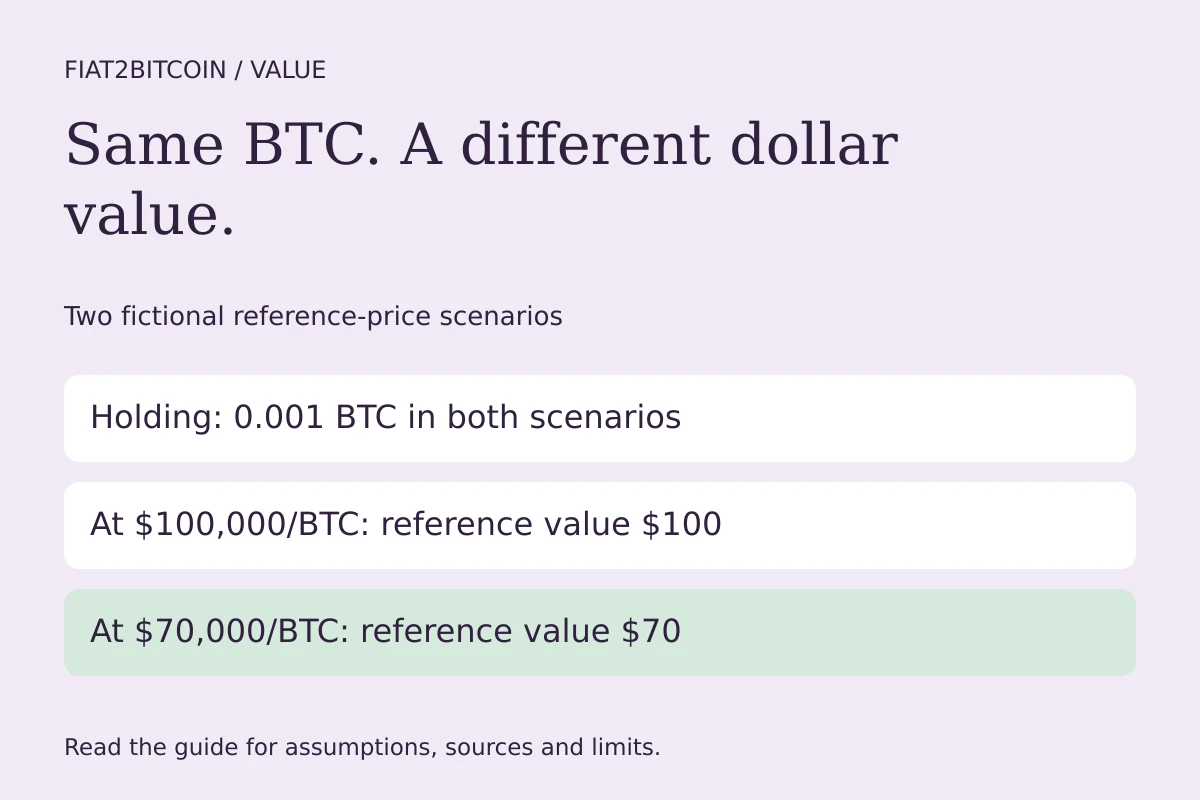
In this fictional example, a holding of one thousandth of a Bitcoin is worth one hundred dollars at a reference price of one hundred thousand dollars per coin. At seventy thousand dollars per coin, the same amount is worth seventy dollars, before selling costs.
Evaluate the claim
The number of coins in that example stayed the same while its dollar value fell thirty percent. Separate useful properties from price predictions. Mining costs do not reimburse buyers for losses. Read the guide’s claim checking table and primary sources before drawing an investment conclusion.
What do people find useful about Bitcoin?

People use BTC for different reasons: transferring value, holding an asset with a specified issuance schedule, or taking a speculative position. A useful explanation distinguishes those motives rather than treating all buyers as people making everyday payments.
Bitcoin.org’s explanation links value to usefulness, acceptance and demand. Blockstream’s educational guide discusses the monetary properties that Bitcoin proponents emphasize. These explain reasons people may want BTC; actual use, costs and preferences vary.
Why scarcity matters—and why it is not enough
Bitcoin’s existing consensus rules specify declining new issuance toward a supply limit of 21 million BTC. Participants verify the rules through the software they choose to run. See the supply explanation for the separate question of issuance and circulating amounts.
Limited supply restricts how many units can be issued under those rules. It cannot make a buyer appear at a particular price. A scarce asset can lose market value when demand falls. Changing the rules also raises adoption and coordination questions; a software proposal alone does not rewrite the rules everyone uses.
Transferability, verification and their trade-offs
Native BTC can be transferred on the Bitcoin network and its transactions checked against the network rules. Wallet software and signing keys determine how a person authorizes spending. The Bitcoin network explanation describes that process.
Using the network still involves practical trade-offs: transaction fees, confirmation time, wallet security and the availability of someone willing to accept BTC. A service holding keys for you adds that service’s own reliability and access conditions. A technical feature can be useful while a particular purchase or payment remains costly or unsuitable.
Same Bitcoin amount, different dollar value
Here is a fictional example that separates the number of coins you hold from the price someone is willing to pay. It is arithmetic, not a forecast or a model of how far the market will move.
Scroll across the table to see all columns.
| Input or result | Scenario A | Scenario B |
|---|---|---|
| BTC held | 0.001 BTC | 0.001 BTC |
| Assumed market price | $100,000 per BTC | $70,000 per BTC |
| Reference dollar value before selling costs | $100.00 | $70.00 |
| Dollar change from A | Starting comparison | −$30.00 (−30%) |
Multiply the amount by the assumed price: 0.001 × $100,000 = $100; 0.001 × $70,000 = $70. The BTC quantity stayed the same while the reference dollar value fell 30%. A supply cap does not prevent that outcome. Fees, spreads and taxes would be additional considerations when turning a reference value into a net sale result.
Use the Bitcoin value calculator to understand quantity × reference price. Keep its output separate from a guaranteed executable quote or a promise about the next market price. The January 2026 price retrospective shows why an intramonth target and a closing-price forecast need different scoring rules.
A practical way to evaluate claims about Bitcoin’s value
When an explanation sounds persuasive, ask what its evidence establishes and what would have to remain true for the argument to matter to you.
Scroll across the table to see all columns.
| Claim you hear | What to check | What remains uncertain |
|---|---|---|
| There will only be 21 million BTC | Consensus rules and the issuance schedule | Future demand and purchasing power |
| Bitcoin is useful for transfers | Fees, confirmation needs and the recipient’s acceptance | Whether it is practical for this payment |
| Many people or firms want it | Dated evidence of actual adoption or holdings | Whether demand will persist |
| Mining uses expensive energy | Operating costs and network security incentives | The price future buyers will pay |
| The price rose before | Which period, drawdowns and the stated comparison | Future returns and your own loss exposure |
What backs Bitcoin? Is it the electricity used to mine it?
Native Bitcoin gives you units transferable under its network rules. It does not carry an issuer’s promise to redeem each coin for a fixed amount of gold or dollars. When someone calls it “backed by” scarcity or computing work, ask whether they mean useful technical properties or an actual redemption promise.
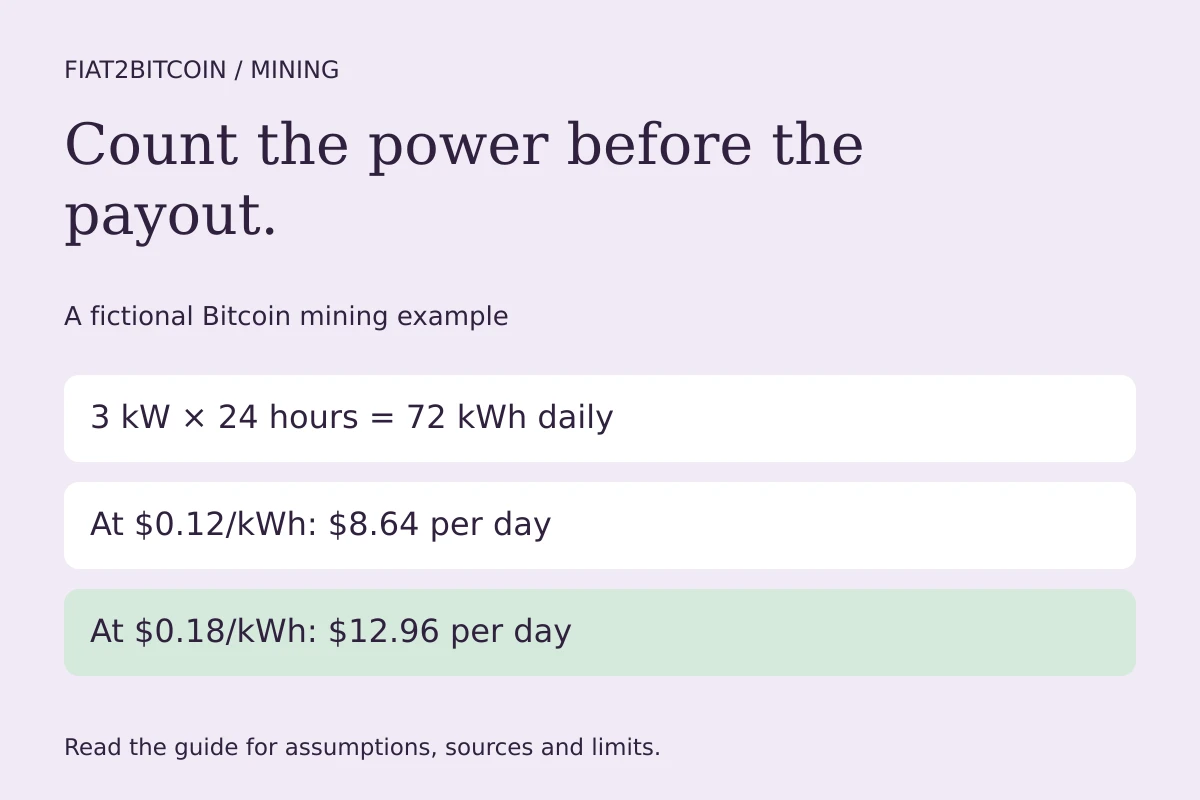
Miners spend resources competing to produce valid blocks. That operating cost can influence whether their own businesses are viable, but it does not reimburse a buyer whose BTC falls in price. The mining guide separates the network process from a miner’s costs and payouts.
Could Bitcoin lose its value?
Yes. Demand, regulation, competition, technical problems, security failures and loss of confidence can affect what buyers will pay. A service failure or lost signing keys can also prevent an individual from accessing funds, even while the wider network continues.
Investor.gov describes direct crypto-asset exposure and volatility. Decide how a possible loss fits your needs instead of treating the existence of useful properties as a purchase recommendation. Avoid anyone promising a fixed return or a guaranteed way to recover money.
Questions about Bitcoin’s value
Is Bitcoin valuable just because people believe in it?
Belief and expectations can affect demand, but people also evaluate concrete properties: transferability, issuance rules, verification and access to counterparties. The price emerges from willingness to trade, and those preferences can change.
Does the supply cap mean its price must rise?
No. Scarcity constrains supply under the current rules; it does not guarantee rising demand. The fictional two-price example shows why the same holding can lose dollar value.
Is Bitcoin the same as a share in a company?
Holding native BTC does not itself give you company shares, dividends or a contractual claim on a business’s profits. A stock, fund or other product linked to Bitcoin has its own structure; read the actual instrument’s terms.
Why do different sites show different prices?
Trading venues, quote times, spreads and included charges can differ. A chart price and the final offer you can execute answer different questions. The Bitcoin spread guide explains that purchase comparison.
Where should a beginner go next?
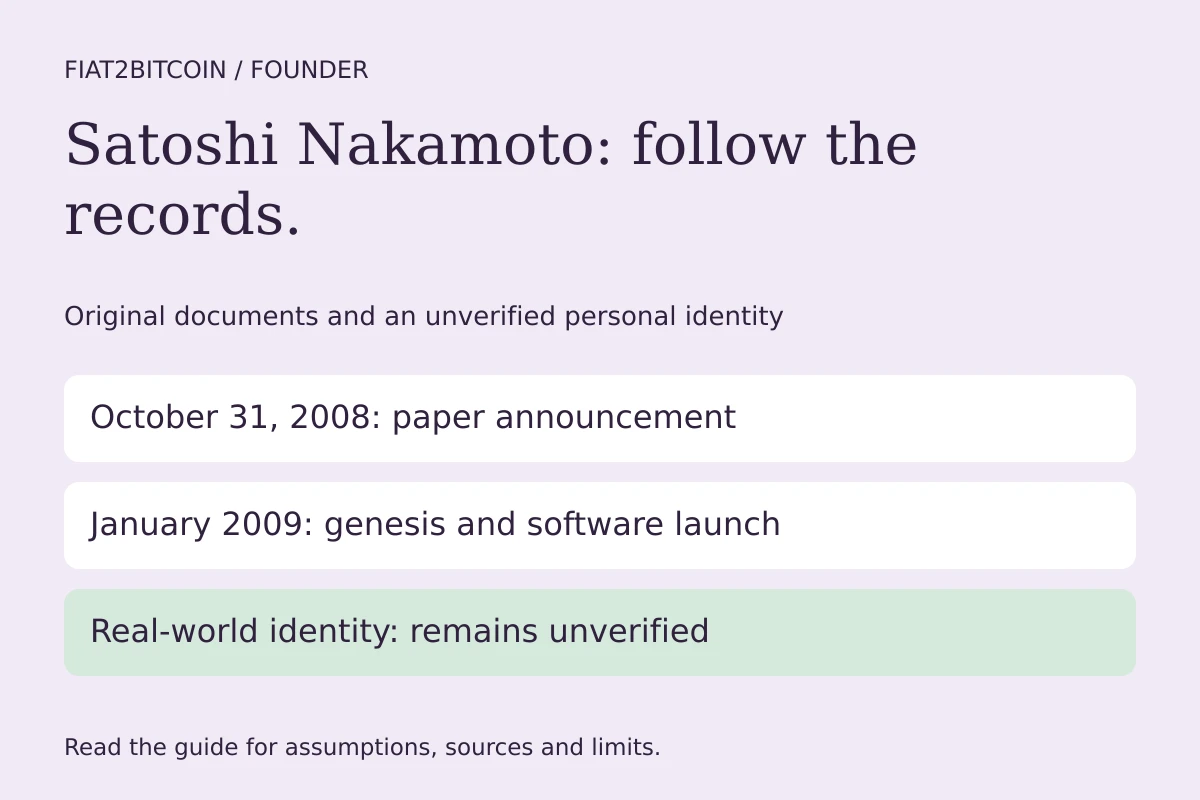
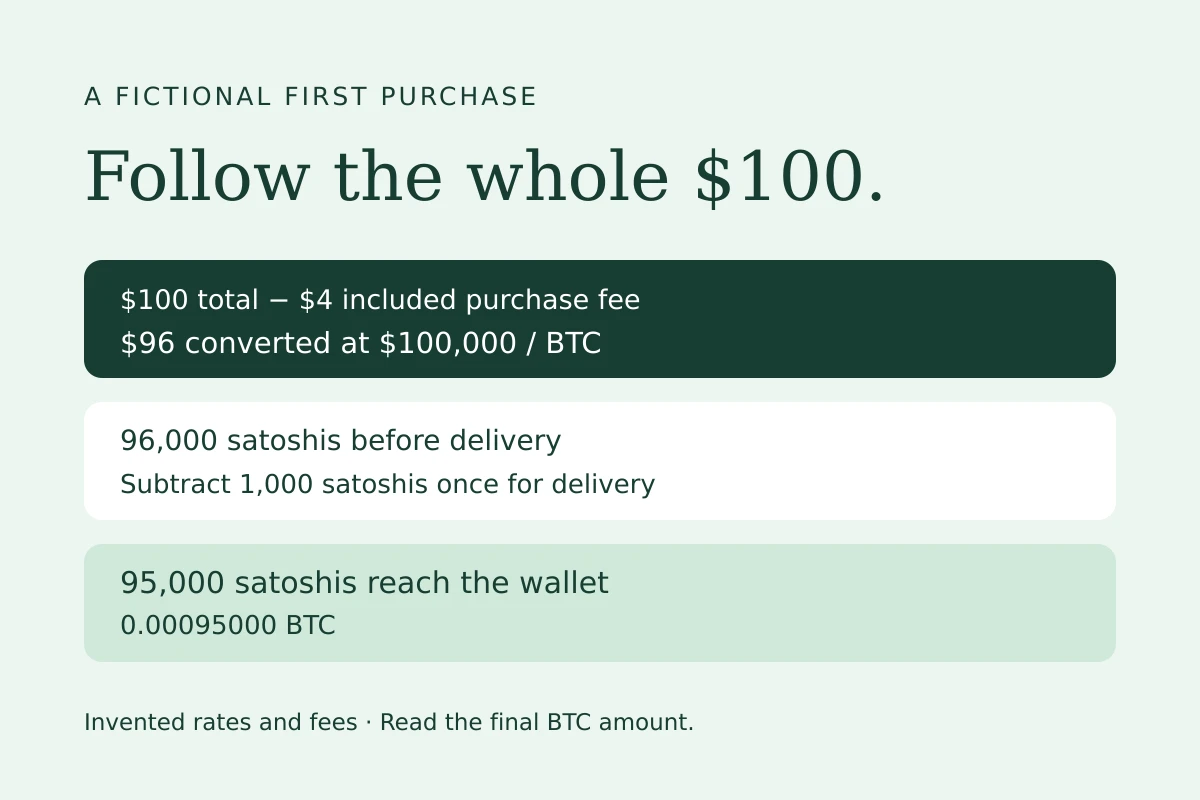
For the history, read who founded Bitcoin. For a purchase you are considering, the first-purchase guide explains costs, destination checks and order records without relying on a future price rise.
Sources & further reading
These primary sources support the explanations and examples above. Check each record’s date and context when following a claim.
- Bitcoin.org: Why bitcoins have value and price formation
- Bitcoin.org: How the network works
- Blockstream: Monetary properties and demand
- Investor.gov: Crypto asset-related investments and volatility
Sources checked November 24, 2026. The scenario and claim-checking matrix are original teaching aids. All prices and amounts in the worked example are fictional. Fiat2Bitcoin may earn commissions on eligible provider purchases; this explanation is not a recommendation to buy. How we prepare our guides.